
Your cart is currently empty!
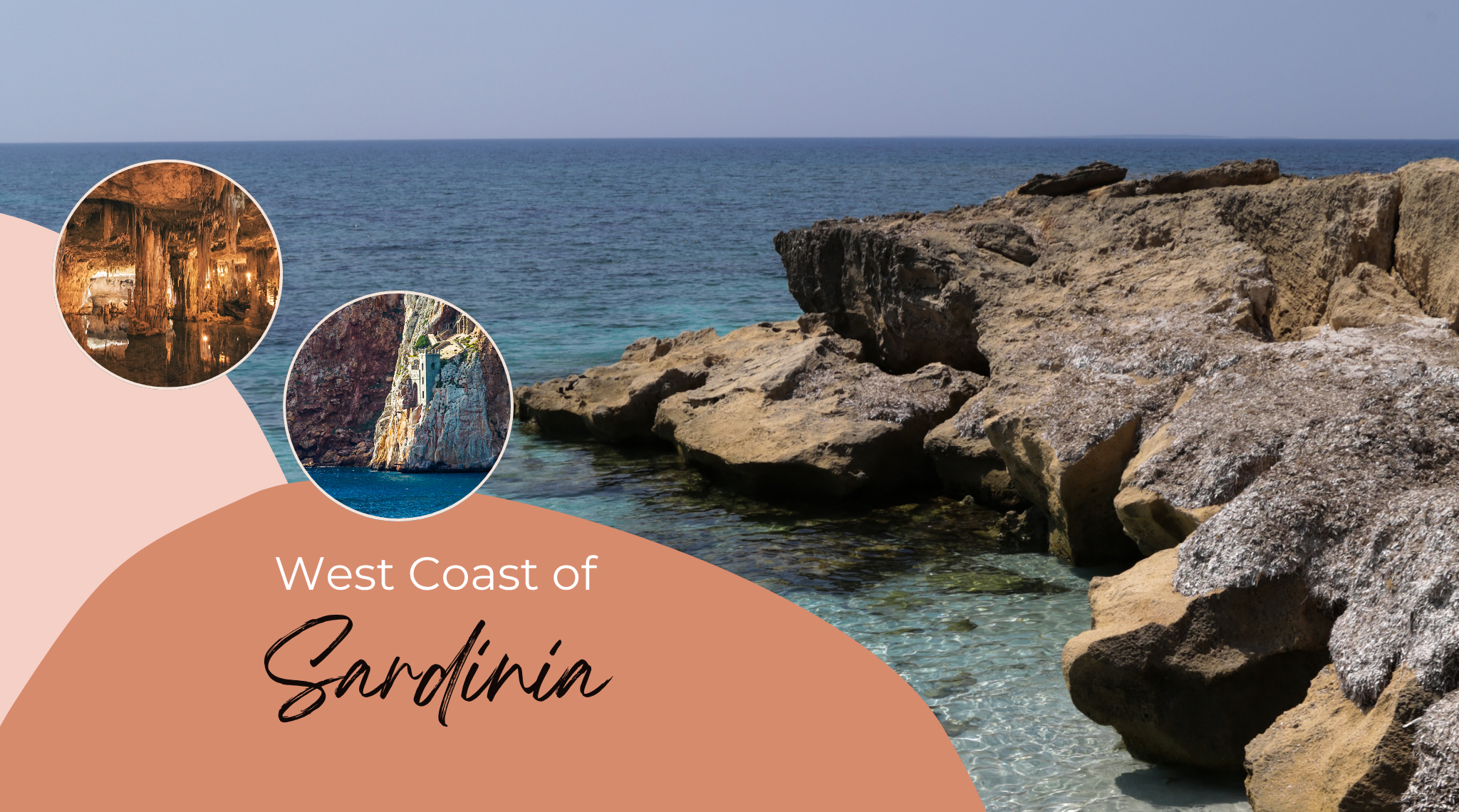
Sardinia is renowned for its idyllic beaches, crystal-clear waters, and unspoiled nature. While many travelers flock to the island’s eastern shores, the western coast harbors impressive gems waiting to be discovered. From rugged landscapes and historical sites to unique caves, Sardinia’s wild west offers plenty to explore. In this post, we’ll guide you through a thematic journey along the western coastline, from north to south, from Costa del Sinis to Costa Verde and Costa Iglesiente.
- 1. Highlights & Must-See Sights
- 2. Beaches & Coastal Areas of the West
- 3. Flora & Fauna
- 4. Hotels & Accommodation Tips
- 5. Kulinarik & Restaurantempfehlungen
- 6. Travel Tips & Suggested Route: Discovering the West Coast
- 7. Interactive Map from Alghero to Costa Iglesiente
1. Highlights & Must-See Sights
Grotta di Nettuno (Neptune’s Grotto)
A massive limestone cave located just west of Alghero, accessible either by a dramatic staircase carved into the cliffside or by boat, this awe-inspiring natural wonder is a must-visit for anyone exploring Sardinia’s west.
Alghero
The Catalan-influenced town of Alghero is a charming destination with its historic old town, sturdy bastions, and exceptional seafood. Don’t miss out on this picturesque town with its Mediterranean flair.
Bosa – Alghero Coastal Road
Considered one of the most beautiful panoramic drives in Europe, the road between Bosa and Alghero winds through lush green hills and jagged cliffs, offering stunning views of the deep blue sea.
Bosa Old Town
The pastel-colored buildings of Bosa line the slopes beneath the Malaspina Castle, perched above the town. It’s a picture-perfect spot and an absolute highlight of the west coast.
Tharros
These impressive ruins, founded by the Phoenicians and later used by the Romans, offer a rare opportunity to experience history with a sea view. The remnants of temples, columns, and baths are situated just steps from the turquoise waters. Nearby, you can visit the Church of San Giovanni di Sinis, one of the oldest Romanesque churches on the island.
Piscinas Dunes
At Costa Verde, you’ll find the almost surreal dunes of Piscinas—among the tallest in Europe. These massive dunes, with their stark beauty, evoke a desert-like landscape that’s hard to forget.
Grotta di Su Mannau
Located near Fluminimaggiore, this fascinating cave system was once used by the Nuragic people for ritual purposes, as evidenced by artifacts found at its entrance. Inside, visitors are treated to colossal chambers, underground rivers, and stunning rock formations.
Grotta Azzurra
Hidden along the dramatic cliffs near Porto Flavia, Grotta Azzurra is a sea cave known for its mesmerizing blue waters. Only accessible by sea, it’s a popular spot for kayakers and nature lovers alike.
Porto Flavia
This former loading port, carved directly into a vertical cliff, is a true marvel. The mining complex is open year-round, but visits are only available through guided tours.
Pan di Zucchero
The iconic “Sugarloaf” of Sardinia stands proudly in the waters off the southwest coast. This giant limestone rock is a popular photo op and a must-see for visitors in the region.
2. Beaches & Coastal Areas of the West
For those seeking untouched nature, rugged beauty, and a variety of beaches, Sardinia’s west coast offers something truly special. From secluded coves to desert-like dunes, you’ll find a wide range of landscapes to explore:
- North of Alghero: Wild beaches and serene coves – Spiaggia di Porto Ferro with its red sand dunes and Spiaggia di Mugoni, a protected bay perfect for families.
- Between Alghero and Bosa: Secluded, pristine beaches – Cala Compoltitu with its emerald-green waters and S’Abba Druche, where sand, rocks, and good infrastructure blend beautifully.
- Costa del Sinis: Caribbean vibes on Sardinia’s west coast – Is Arutas with its white quartz pebbles, and Mari Ermi and Maimoni, which enchant with their fine sand and crystal-clear waters.
- Costa Verde: Vast dune landscapes and remote beaches – Piscinas with its impressive sand dunes, and Torre dei Corsari and Scivu, where sand and rocks merge dramatically.
- Costa Iglesiente: Steep cliffs and secluded coves – Cala Domestica, a fjord-like bay, and Masua, Portu Banda, and Plagemesu, with views of the iconic “Pan di Zucchero” rock.
3. Flora & Fauna
The natural landscapes on Sardinia’s west coast are as diverse as they are unique. In the Sinis Peninsula, the Cabras Lagoon attracts hundreds of flamingos during spring and fall. The surrounding areas are filled with aromatic Mediterranean macchia, reed beds, and salt lakes.
In the Monte Arcuentu Nature Park, located along Costa Verde, you’ll encounter wild mountain landscapes, cork oak forests, and nearly untouched flora. Keep your eyes peeled for wild boars and muflons, the island’s wild sheep.
4. Hotels & Accommodation Tips
Rather than large hotel complexes, the west coast of Sardinia boasts charming boutique hotels, agriturismi (farm stays), and cozy bed-and-breakfasts. In Bosa, consider staying in an old town house with a riverside terrace. On the Sinis Peninsula, several agriturismi offer regional cuisine and a tranquil environment.
Accommodation on Costa Verde is rare but exceptional. Eco-lodges near Piscinas or small cottages tucked behind the dunes offer a one-of-a-kind experience. Iglesias and its surroundings feature stylishly renovated stone houses for a more traditional stay.
5. Kulinarik & Restaurantempfehlungen
Sardinian cuisine along the west coast is hearty, authentic, and deeply rooted in local traditions. Expect fresh fish, wild game, cheese, and simple ingredients served with centuries-old techniques:
- Bottarga: Dried mullet roe, grated over pasta or salads – particularly famous in Cabras.
- Porcheddu: Suckling pig grilled on a spit, slowly cooked over an open fire.
- Sebadas: A sweet fried pastry filled with cheese, served drizzled with honey.
Recommended Restaurants on the West Coast:
- Ristorante Sa Pischedda (Bosa): A fish restaurant with a terrace overlooking the Temo River, offering seasonal dishes.
- Agriturismo Is Solinas (Near Cabras): Traditional Sardinian fare with homemade pasta, house wine, and meat from the farm.
- Ristorante Al Tonno di Corsa (Carloforte): Specializes in tuna dishes.
6. Travel Tips & Suggested Route: Discovering the West Coast
A perfect starting point for a west coast journey is Alghero – its charming old town, airport, and sea views are the ideal introduction to Sardinia’s west. From there:
- Alghero & Capo Caccia | 2 Days
Explore the old town, watch the sunset at Capo Caccia, and take a boat tour to Neptune’s Grotto. - Coastal Road from Alghero to Bosa | 1 Day
A stunning scenic drive with stops at Cala Compoltitu and Bosa Marina. - Sinis Peninsula & Oristano | 2 Days
Quartz beaches (Is Arutas), Tharros, flamingos, and bottarga in Cabras. - Costa Verde | 2 Days
The Piscinas dunes, wild beaches near Scivu, and a stay at an agriturismo. - Iglesiente & Carloforte | 2–3 Days
Rocky coves (Cala Domestica), “Pan di Zucchero,” and tuna dishes on San Pietro Island.
Recommended Duration: At least 8–10 days
7. Interactive Map from Alghero to Costa Iglesiente
Check out the interactive map to explore all the highlights, beaches, and towns at a glance. It’s perfect for planning your route – simply click and explore:
Our conclusion: Sardinia’s west coast is wilder, more rugged, and often quieter than the northern or eastern parts of the island. If you love nature, authenticity, and diverse landscapes, this region is where you’ll find your personal Sardinia. From caves and ancient mines to quartz sand beaches and vibrant old towns, the west coast offers an unparalleled and unforgettable experience.
Additional reading suggestions for you:

Julia von Wonders and Waves
Willkommen bei Wonders and Waves - Wir geben dir Tipps zu sehenswerten, sicheren und budgetfreundlichen Reisezielen weltweit!
Leave a Reply