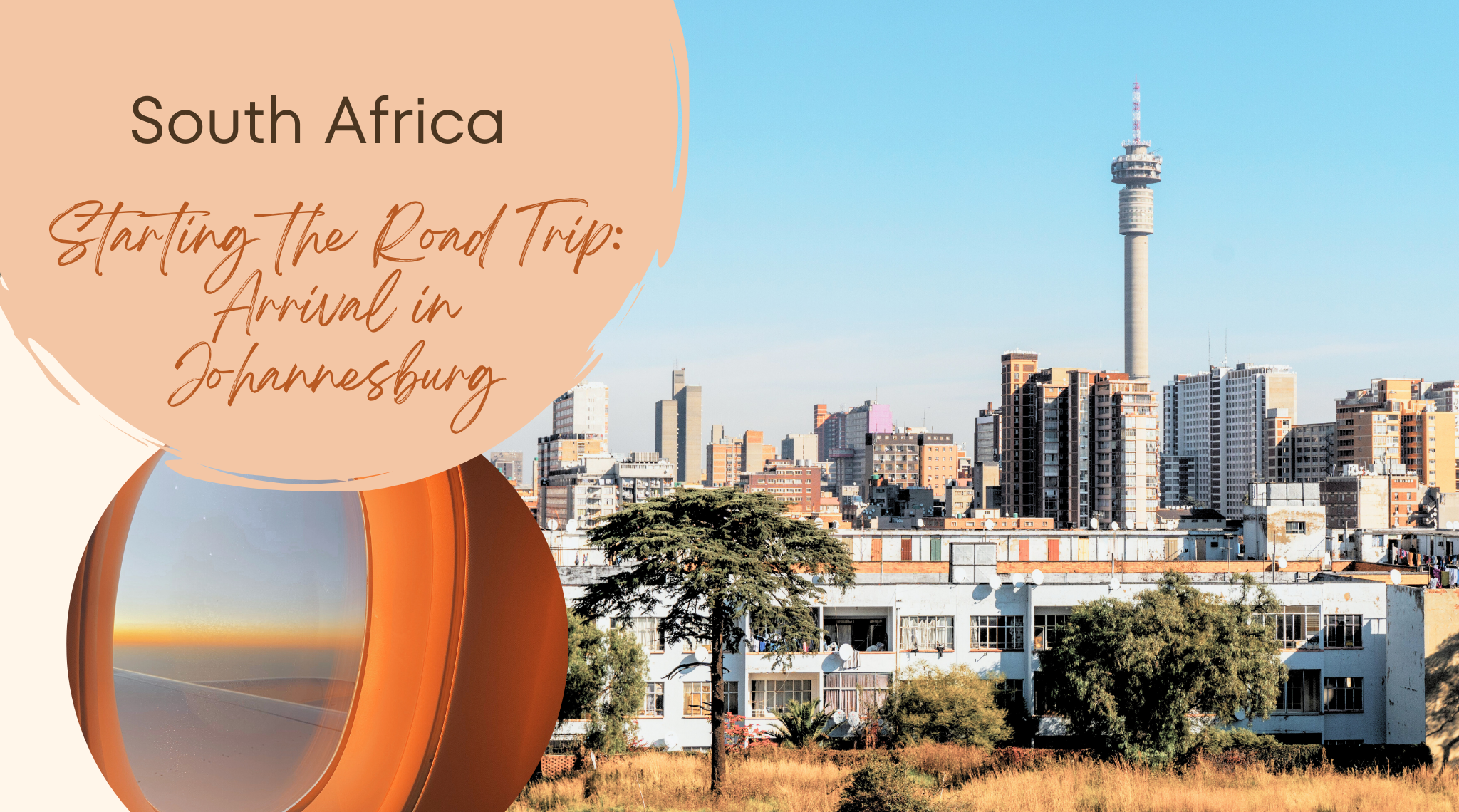
It begins: We leave Europe behind, and outside the airplane window Africa slowly unfolds. The landscape below becomes wider, rougher, and unfamiliar. We’re heading to Johannesburg – with a rental car booked, a rough route in mind, and full of anticipation for safaris, national parks, coastal roads, and that unmistakable feeling of complete freedom.
Essential Facts for Starting Your South Africa Trip
1. Airlines & Flight Time from Germany to South Africa
The distance from Germany to Johannesburg is roughly 5,500 to 5,700 miles (8,800 to 9,200 kilometers) – far enough to truly feel like a long-haul journey, yet close enough for a comfortable flight. South Africa is easily reachable from Germany via nonstop flights. Lufthansa, for example, offers direct connections from Frankfurt (FRA) and Munich (MUC) to Johannesburg and Cape Town. Depending on your departure airport, flight time is around 10 to 11 hours. Alternatively, many airlines operate flights with one stop, often at more attractive prices. Popular options include:
Qatar Airways via Doha
Emirates via Dubai
Ethiopian Airlines via Addis Abeba
These routes usually extend total travel time to around 14 to 18 hours, depending on layover duration, but can be significantly cheaper – especially outside peak season.
2. Time Zone & Jet Lag
One of South Africa’s biggest advantages is its minimal time difference. The country is in the UTC +2 time zone and does not observe daylight saving time. This means:
In German winter (e.g. January), South Africa is one hour ahead
In German summer, there is no time difference at all
This is incredibly easy on the body. We felt noticeably less jet-lagged than on trips to Asia or the Americas – perfect for starting a road trip right after arrival without losing several days to recovery.
3. Currency & Paying in South Africa
South Africa’s currency is the South African Rand (ZAR). Card payments are widely accepted – even in smaller restaurants, guesthouses, and at gas stations. Contactless payment works almost everywhere. Still, it’s wise to carry some cash for:
Tips
Gas stations (for service staff)
Small shops, markets, or parking fees
We withdrew cash directly at the airport after arrival. ATMs are also widely available in cities. (Make sure your credit card doesn’t charge high foreign transaction fees.)
4. Weather in January – Summer in South Africa
January falls right in the middle of South Africa’s summer and is an excellent time for a road trip. Days are long, and nature is lush and vibrant. Typical conditions include:
Temperatures between 77 and 95 °F (25 and 35 °C)
Johannesburg & inland regions – warm, sometimes humid, with possible short afternoon thunderstorms
Cape Town & coastal areas – sunny, drier, and often a bit windy
5. Visa & Entry Requirements
For German citizens, entering South Africa is straightforward. No visa is required in advance. Upon arrival, you receive an entry stamp allowing a stay of up to 90 days. Key entry requirements include:
Passport valid for at least 30 more days
Two blank pages in your passport
Our arrival at Johannesburg Airport was well-organized and quick – a relaxed start after a long flight.
6. SIM Card & eSIM – Staying Connected on the Road
Especially on a road trip, mobile internet is essential – for navigation, accommodations, gas stations, restaurant tips, and emergencies.
You have two solid options:
eSIM, booked online before your trip and activated immediately after landing – for example via the reliable provider MobiMatter
Local SIM card (such as Vodacom or MTN), available directly at the airport
It’s also a good idea to download offline maps (e.g. Google Maps) in advance – especially for remote regions.
7. Rental Car in Johannesburg
A rental car is the best and most flexible way to explore South Africa – especially on a route from Johannesburg to Cape Town and along the Garden Route before returning. We recommend picking up your car directly at O.R. Tambo International Airport. All major rental companies are represented, and the process is straightforward.
What to look out for:
Fully comprehensive insurance with zero excess
Automatic transmission – not essential, but more relaxed in left-hand traffic
Choose accommodations with secure parking
Take it easy during the first few kilometers – left-hand driving feels natural sooner than expected
After a short adjustment period, driving in South Africa becomes a real pleasure – wide roads and spectacular scenery included.
Our conclusion: Landing in Johannesburg marks the start of our 21-day road trip through South Africa – a journey filled with national parks, unforgettable safari moments, dramatic landscapes, Atlantic sea breezes, and vibrant African culture. In the upcoming posts, we’ll take you along our route from Johannesburg to Cape Town, along the Garden Route, and back again.
Are you planning a road trip through South Africa? Feel free to leave a comment and share your route, preferred travel time, or any questions you might have. I’d love to hear about your travel plans!
Discover Cape Town’s 10 must-see attractions: Table Mountain, Bo-Kaap, Kirstenbosch, Clifton Beaches and more – including pro tips, best times, and durations.
How to Experience Cape Town in 48 Hours: The best sights, smart daily routes and insider tips for short trips await. Compact, well-planned and easy to follow.
4 days in Cape Town – discover Table Mountain, Bo-Kaap, Kirstenbosch, Chapman’s Peak Drive, Cape of Good Hope and Boulders Beach with insider tips and self-drive routes.



Leave a Reply