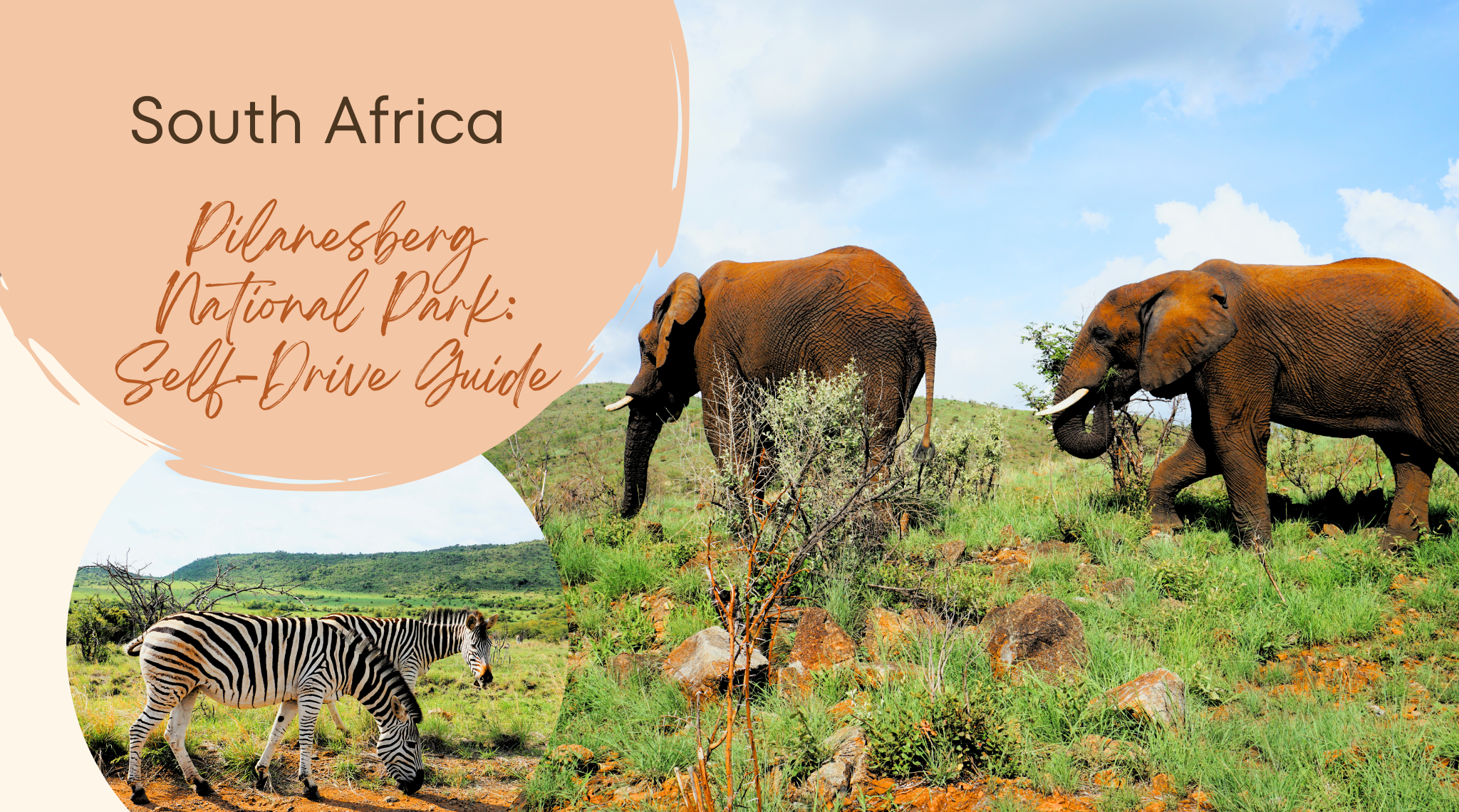
Pilanesberg National Park is one of South Africa’s best safari destinations – especially for travelers who want to experience wildlife independently, without internal flights, and in a malaria-free area. Located just a few hours from Johannesburg, the park offers Big Five safaris, diverse landscapes, and surprisingly excellent infrastructure for self-drivers. This guide covers everything you need to know to plan your visit:
Pilanesberg National Park is located in South Africa’s North West Province, approximately 105–125 miles northwest of Johannesburg. Depending on traffic and your chosen gate, the drive takes around 2.5 to 3 hours.
With a total area of roughly 136,000 acres, Pilanesberg is significantly smaller than Kruger National Park – but extremely well organized. Its compact size makes navigation easy, especially for first-time safari visitors, and often leads to more concentrated wildlife sightings.
2. History & Background
The area that is now Pilanesberg National Park was originally used for agriculture. In the 1970s, its ecological potential was recognized – the park lies within a volcanic crater that formed around 1.2 billion years ago. This geological origin created fertile soils and a remarkably diverse landscape.
Between 1979 and 1982, more than 6,000 animals from over 20 species were relocated to Pilanesberg in one of the largest wildlife relocation projects in history.
3. Getting There & Entrance Fees for Self-Drivers
Pilanesberg is ideal for a self-drive safari from Johannesburg or Pretoria:
Johannesburg → Pilanesberg: approx. 105–125 miles
Driving time: 2.5–3.5 hours, depending on traffic and gate
Pretoria → Pilanesberg: approx. 2–3 hours
The roads are mostly paved and in good condition – a standard vehicle is perfectly sufficient, no 4×4 required.
Distances inside the park are manageable, the gate system is clearly structured, and several lodges are located directly inside or at the park’s edge.
Tip: Aim to arrive early in the morning or late afternoon to maximize your chances of wildlife sightings on your first drive.
Entrance Fees (as of January 2026 – subject to change):
Fees are charged per person, per day, and paid directly at the gate (card or cash accepted):
Location: Approx. 30 minutes from the park (Rustenburg area)
Extras: Garden, pool, restaurant, relaxed atmosphere
7. Practical Tips for Self-Drivers
Infrastructure & Food:
Only park lodges (Bakubung, Kwa Maritane) offer restaurants and cafés. There are no shops or fuel stations inside the park. Stock up on snacks, water, and fuel before entering – Rustenburg or Sun City are good options.
Park Rules:
Speed limit: max. 40 km/h (25 mph) on main roads, 20–30 km/h (12–18 mph) on secondary roads
Wildlife always has right of way – especially elephants, buffalo, rhinos
Stay in your vehicle except at designated picnic sites
Close windows when large animals approach
Turn off the engine and wait patiently at waterholes
8. Best Time to Visit
The best time to visit Pilanesberg National Park is during the dry season from May to September. Temperatures are pleasant, vegetation is sparse, and wildlife gathers at water sources.
The rainy season from October to April brings higher temperatures, short thunderstorms, and lush green landscapes – beautiful, but wildlife spotting can be more challenging.
9. Preparation Checklist
Choose accommodation based on gate location
Book early: Lodges often sell out months/weeks in advance
Bring the right gear:
Camera with zoom lens
Hat, sunscreen, sunglasses
Lightweight clothing, plus long sleeves for sun & insects
Our conclusion: Compared to larger and more famous parks like Kruger, Pilanesberg National Park is compact, easy to navigate, and perfect for safari first-timers – without sacrificing the thrill of real wildlife encounters. With the right preparation, it’s one of the most rewarding self-drive safari experiences in South Africa.
When are you planning your Pilanesberg adventure – or have you already been? Share this guide with your favorite road trip buddies and leave us a comment below!
Discover Koh Yao Noi’s quiet beaches, stunning viewpoints, local restaurants, and find our travel tips for visiting this relaxed island between Phuket and Krabi.
Discover the most beautiful beaches on Koh Yao Noi – from quiet coves and kayaking spots to hidden beach paradises with honest tips and recommendations.




Leave a Reply