
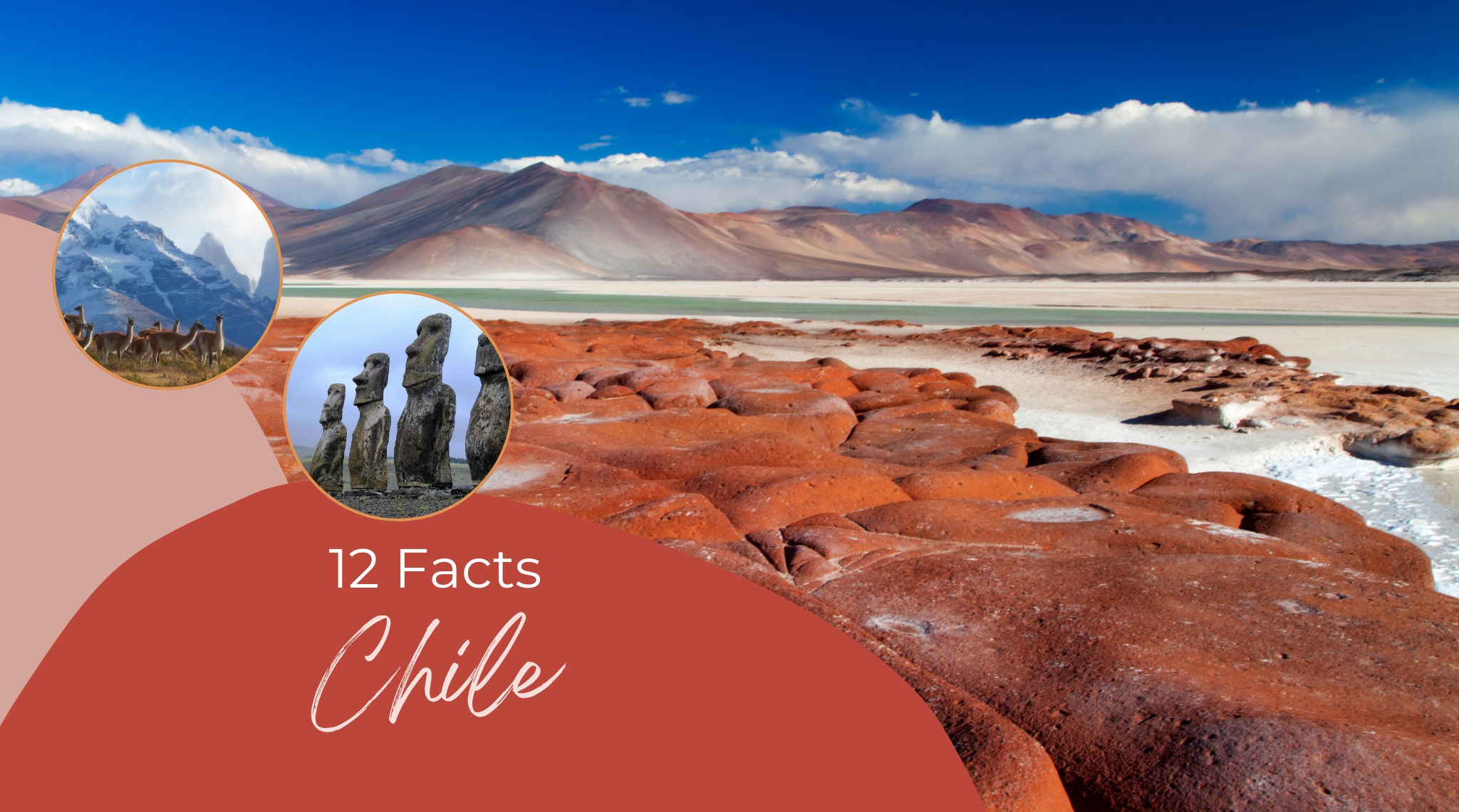
Chile is a land of incredible contrasts, from its vast deserts to its icy glaciers and vibrant culture. These 12 fun facts reveal the unique history, nature, and culture that make Chile one of a kind.
1. The Driest Desert in the World
Northern Chile’s Atacama Desert holds the title of the world’s driest desert. In some areas, rain hasn’t fallen for decades! Thanks to its unique climate, the Atacama is a major attraction for astronomers who come to view the stars under some of the clearest skies on the planet.
2. An Impressive Coastline
Chile stretches along the Pacific for about 4,300 kilometers, nearly the distance from Berlin to Dubai! Despite an average width of just 177 kilometers, Chile’s coast is strikingly diverse, featuring beaches, fjords, and dramatic cliffs.
3. The “Gateway to Antarctica”
Chile claims a portion of Antarctica and maintains research stations on the icy continent. The southern city of Punta Arenas is a base for many Antarctic expeditions and ranks among the southernmost inhabited places on earth.
4. Easter Island and Its Mysterious Moai Statues
Easter Island, located 3,500 kilometers off the Chilean mainland, is famous for its enigmatic Moai statues. These colossal stone figures, crafted by the island’s indigenous people, are both a UNESCO World Heritage Site and an archaeological mystery.
5. A World-Class Wine Region
Chilean wines have gained global recognition, especially those from the Maipo Valley, Casablanca, and Colchagua. Chilean viticulture dates back to the colonial era, and wine production remains a key part of the economy.
6. Chile’s Volcanic Landscape
Chile sits on the Pacific Ring of Fire and is home to over 2,000 volcanoes, around 500 of which are active. The Villarrica volcano, known for its frequent ash and lava emissions, is a favorite destination for hikers.
7. The Pisco Controversy
Pisco, a popular grape brandy, sparks a long-standing debate between Chile and Peru, as both nations claim to be its birthplace. The “Pisco Dispute” is a rivalry that touches on historical pride, culture, and even legal naming rights.
8. Home of the Mapuche
Chileis home to the Mapuche, an indigenous people with a significant influence on the nation’s culture. The Mapuche fought fiercely against Spanish colonizers and maintained their independence for centuries. Today, they remain a vibrant part of Chilean society, preserving their language and traditions.
9. Torres del Paine National Park
Torres del Paine National Park in southern Chile ranks among the world’s most beautiful reserves, famed for its unique mountain formations, turquoise lakes, and abundant wildlife. It draws nature enthusiasts from across the globe.
10. Observatory Paradise
Chile hosts some of the world’s largest and most advanced observatories, including the Paranal Observatory and ALMA (Atacama Large Millimeter Array) in the high-altitude Atacama. Clear, dry skies make Chile an ideal spot for stargazing and space research, leading to numerous important discoveries.

11. The Mysteries of Chiloé
The island of Chiloé is renowned for its unique wooden churches, a UNESCO World Heritage Site. Steeped in folklore, Chiloé is said to be home to mythical beings like the “Pincoya,” a sea goddess, and the “Trauco,” a mischievous dwarf-like figure.
12. Chile’s Earthquake and Tsunami Legacy
Sitting on the tectonic boundary of the Nazca and South American plates, Chile experiences frequent earthquakes. The world’s largest recorded quake struck Valdivia in 1960 with a magnitude of 9.5. Since then, Chile has become a global leader in seismic technology and disaster preparedness.
Chile is a land of contrasts and surprises, from its arid deserts to icy glaciers, bustling cities to isolated islands. With a culture influenced by both indigenous heritage and its colonial past, Chile is an endlessly captivating destination.

Leave a Reply