
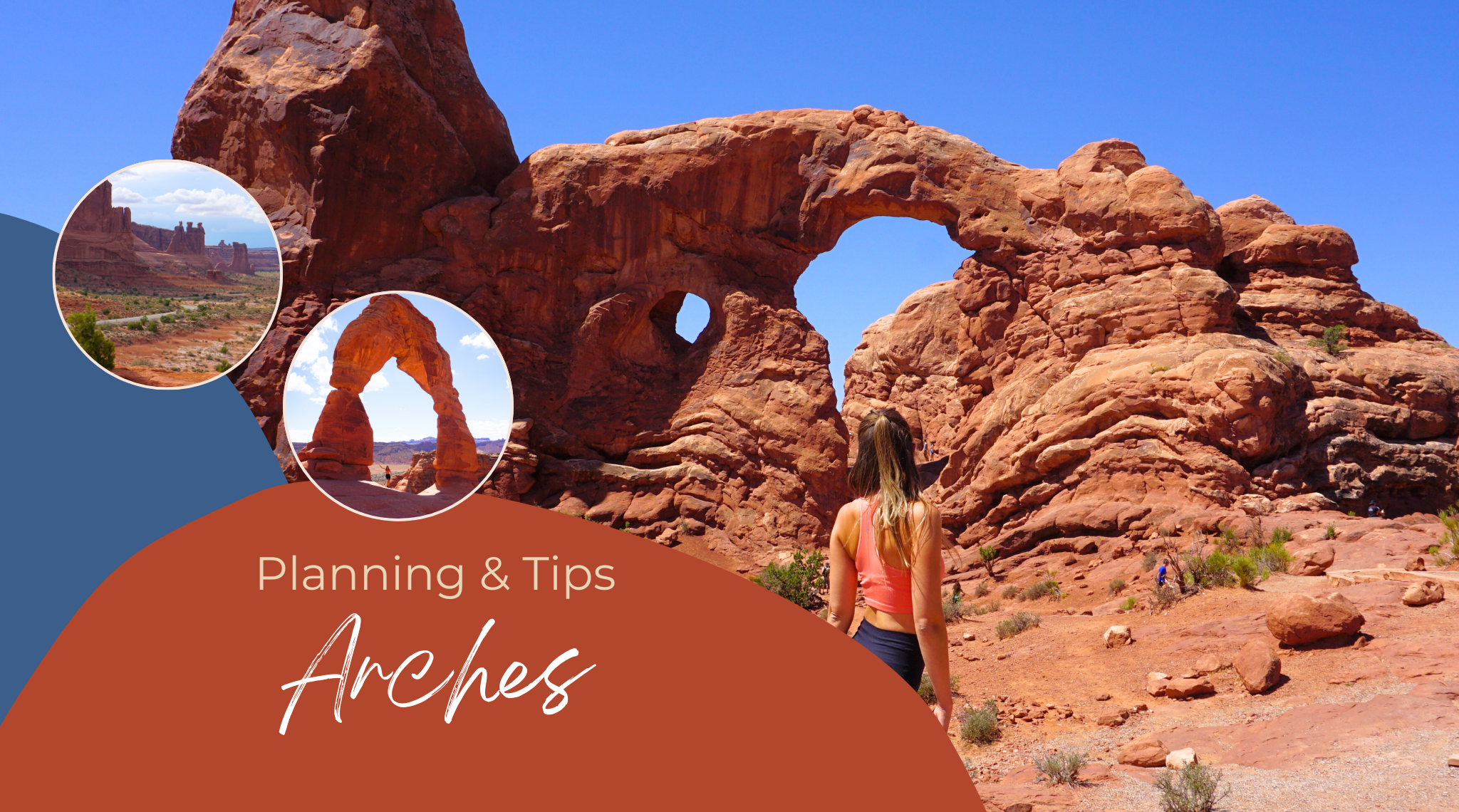
Arches National Park is a breathtaking gem in southeastern Utah. Home to over 2,000 natural sandstone arches, bizarre rock formations, and a vibrant red desert landscape, it’s a paradise for hikers, photographers, and nature enthusiasts alike. This guide covers everything you need to plan the perfect visit:
- 1. History & Background
- 2. Getting There & Entry Fees
- 3. Park Highlights
- 4. Hikes for 1–2 Days
- 5. Facilities, Opening Hours & Accommodation
- 6. Final Preparations
1. History & Background
Established in 1929, Arches National Park was created to protect one of the largest concentrations of natural stone arches in the world. Over millions of years, erosion, frost wedging, and wind sculpted these iconic formations. Covering roughly 120 sq mi on the Colorado Plateau, the park’s most famous landmarks include Delicate Arch – Utah’s iconic symbol – Landscape Arch, and the Windows Section. Beyond arches, you’ll also find towering spires, imposing rock walls, and otherworldly sandstone formations.
2. Getting There & Entry Fees

Arches National Park is located just north of Moab, Utah, and is easily accessible by car.
Park Entrance
There is only one main entrance on U.S. Route 191, about 5 miles north of Moab. From here, the park road leads to all the attractions.
Nearby Airports
- Canyonlands Field Airport (CNY): ~15 minutes from Moab, regional connections.
- Grand Junction Regional Airport (GJT): ~2 hours by car.
- Salt Lake City International Airport (SLC): ~4 hours by car, ideal for a Utah road trip.
Entry Fees
Admission currently costs $30 per vehicle (valid for 7 days). The America the Beautiful Pass is accepted.
During peak season (usually April to October), there is a timed entry system where you must reserve a time slot in advance.
3. Park Highlights

Arches National Park is full of natural wonders:
- Delicate Arch – Utah’s most famous arch, featured on license plates. A 3 mi hike takes you to this freestanding marvel.
- Landscape Arch – One of the world’s longest natural arches, with a span of nearly 290 ft.
- The Windows Section – Multiple large arches close together, perfect for short walks and sunrise photography.
- Double Arch – Two massive arches connected in one stunning formation.
- Devils Garden – A hiker’s paradise with several arches along a varied route.
- Balanced Rock – A massive boulder seemingly perched on a pedestal.
Despite its desert setting, the park hosts many species:
- Mule deer, desert cottontails, coyotes, foxes
- Lizards, rattlesnakes
- Various raptors and songbirds
Safety Tips:
- Summers can be scorching – bring sun hats, sunscreen, and plenty of water.
- Rocky surfaces can be slippery – sturdy hiking shoes are a must.
- Do not feed or approach wildlife.
- Watch for flash floods in narrow canyons, especially during rain.
4. Hikes for 1–2 Days


Balanced Rock Loop
Distance: 0.3 mi loop | Difficulty: Very easy
A short stroll around Balanced Rock, offering multiple perspectives of this 16-meter-high (52 ft) natural wonder.
Double Arch Trail
Distance: 0.5 mi round trip | Difficulty: Easy
Flat and accessible, this trail leads directly to two connected arches – perfect for families or a quick detour.
Delicate Arch Trail
Distance: 3 mi round trip | Difficulty: Moderate to challenging
The park’s signature hike climbs gradually over smooth slickrock, with narrow ledges toward the end. The payoff? A close-up view of the majestic Delicate Arch. Bring plenty of water and a hat during summer heat.
Devils Garden Trail
Distance: 7.8 mi round trip | Difficulty: Moderate to challenging
The park’s longest and most diverse trail, passing Landscape Arch, Navajo Arch, and Double O Arch. Some sections require scrambling, so this is not for beginners.
Shortcuts are possible: e.g., Landscape Arch (round trip, approx. 1.8 mi, easy), Navajo Arch & Partition Arch (round trip, approx. 3 mi, easy–moderate) or to Double O Arch (round trip, approx. 4.5 mi, moderate–challenging).
5. Facilities, Opening Hours & Accommodation
Opening Hours
Arches National Park is open year-round, and the Visitor Center is open daily (except Christmas) – with extended hours in summer.
Food
There are no restaurants or kiosks in the park. Stock up on snacks, water, and lunch in Moab beforehand.
Fuel
Gas stations are only available in Moab.
Where to stay
Camping: Devils Garden Campground is the only park campground, often fully booked in spring and fall.
Lodges & Hotels: Moab offers options from budget hostels to boutique hotels.
6. Final Preparations

- Check the official website and NPS app for current updates.
- Book Timed Entry Tickets in advance (April–October).
- Dress in layers – desert evenings can be chilly.
- Bring at least 4 liters of water per person per day.
- Drones are prohibited.
- Stay on marked trails to protect the fragile desert crust.
Our conclusion: Arches National Park is an unmissable stop on any Southwest road trip. The mix of awe-inspiring arches, endless rock formations, and vivid desert colors is simply unforgettable. With careful planning, your visit will be full of magical moments.
Which Arches hike would you tackle first?
Share this guide with your favorite road trip buddies and leave us a comment below!
Discover Your Next Travel Destination:

Lake Ohrid Tours – The 6 Best Experiences Around the Lake
Discover the 6 best Lake Ohrid tours – from city sightseeing and SUP adventures to cooking classes, Sveti Naum boat trips and day tours to Mavrovo National Park.
Weiterlesen
North Macedonia Travel Guide – The Best Tips for Your Trip
Planning a trip to North Macedonia? Discover everything you need to know about entry requirements, the best time to visit, getting around, food, costs and essential do’s and don’ts.
Weiterlesen
Discover Mavrovo, North Macedonia – Top Sights & Hiking Tips from Lake Ohrid
Discover Mavrovo National Park on your own – including the best sights, hiking tips, waterfalls, monasteries and ski resort information for a day trip from Lake Ohrid.
WeiterlesenSomething went wrong. Please refresh the page and/or try again.

Leave a Reply