
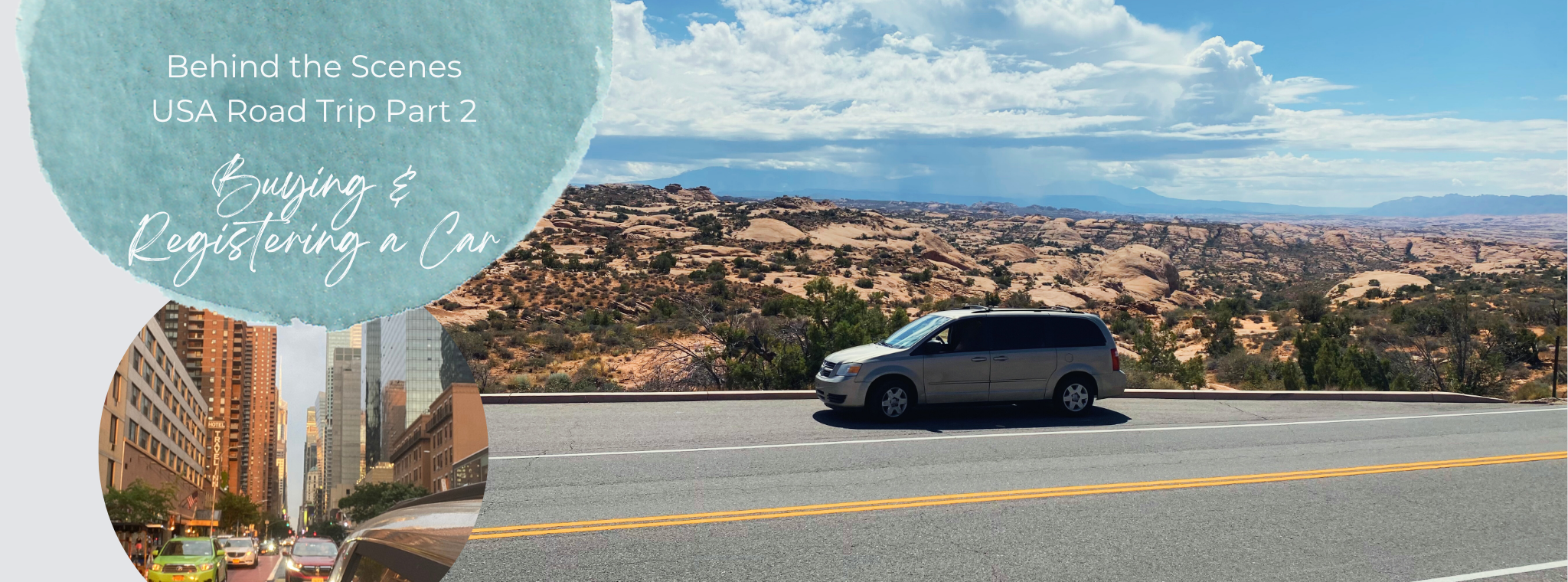
Buying our own car and converting it into a camper meant total freedom and flexibility for our three-month road trip across the United States. Instead of checking into new hotels every night, we carried our home with us – from our very first morning in New York City to the final sunset in Los Angeles.
Part 2: Buying a Road Trip Van
In this guide, we’ll show you how to find the perfect road trip van, what it costs, and what you need to know before you buy.
Key topics covered:
- 1. The best cars for a US road trip
- 2. How to buy a car in the US
- 3. Registration & Insurance
- 4. Selling your car at the end of the trip
1. What kind of car is best for a USA road trip?
For a long-distance road trip across the States, you’ll want a vehicle that’s reliable, spacious, and easy to convert. Minivans are especially popular – the back seats can fold completely flat, creating the perfect sleeping area for two travelers.
Popular models for US road trips & vanlife:
- Dodge Grand Caravan – a classic with fold-flat “Stow’n Go” seats, ideal for camper conversions
- Chrysler Town & Country – similar to the Dodge, but often a bit more comfortable
- Toyota Sienna – highly reliable, though typically more expensive
- Honda Odyssey – roomy and great for two people traveling long distances
💵 Typical price ranges (as of 2025):
- Used vans: $3,000–$5,000 (older, high mileage)
- Mid-range: $6,000–$10,000 (well maintained, under 200,000 miles)
- Newer models or pre-built camper conversions: from $12,000
Tip: If you plan to sell the car after your trip, invest in a popular model with strong resale value – Toyota and Dodge are safe bets therefore.
2. How to buy a car in the US
Buying a car in the US isn’t difficult, but there are a few things you need to know – especially if you’re not a US resident.
🔍 Where to find your car:
- Facebook Marketplace & eBay: Best for private sales, especially in big cities
- Craigslist: The classic for local deals (watch out for scams)
- CarGurus or Autotrader: Great for browsing dealer listings with clear price comparisons
- Facebook groups like “Overlanding USA”: Perfect for vanlife and adventure vehicle listings
📄 What to check before you buy:
- Title: Must be “clean.” Avoid cars marked “salvage” or “rebuilt.” Always ask to see the title before paying.
- VIN check: The VIN (Vehicle Identification Number) must match across the title, windshield, and door frame. Run a quick history check online (e.g., https://vehiclehistory.com).
- Test drive & mechanic check: Always worth it – check brakes, tires, oil, battery, and A/C.
💳 How payment works in the US:
For private sales (e.g., via Facebook Marketplace, Craigslist, or CarGurus):
- Cash: Still very common, especially under $10,000. Fast but risky – avoid carrying large amounts.
- Cashier’s Check / Certified Check: The most secure option. Issued by a US bank (e.g., Wells Fargo, Chase). You’ll need a US bank account.
- Wire Transfer or Zelle: Increasingly common but typically only between US bank accounts.
Tip: If you only have a European bank account, use Wise or Revolut for international transfers – but always confirm that the seller accepts it. Many private sellers prefer cash or a cashier’s check.
For dealer purchases:
- Payment options usually include credit card, wire transfer, or cashier’s check (rarely cash).
- Expect a dealer fee of $200–$500.
- Some dealers offer temporary registration or insurance services – this can simplify the process.
- Always ask for the “out-the-door price”, which includes all taxes and fees.
📄 Essential documents at handover:
- Vehicle Title (signed over to your name)
- Bill of Sale (contract with price, date, VIN, and both signatures)
- Receipt or proof of payment
3. Registration & Insurance
After buying your car, you must register and insure it – both require a valid US address (for example, a friend’s address or a mail-forwarding service).
- Insurance: Proof of insurance is mandatory for registration. Prices vary widely by state – New Jersey and Florida tend to be cheaper than California or New York. Always bring your insurance certificate to the DMV.
- Safety Inspection: Some states require a vehicle safety inspection before registration. This check confirms that brakes, lights, tires, and other safety systems are functioning properly.
- Emission Inspection: In states with stricter environmental laws (e.g., California), you’ll also need an emissions test to ensure the car meets local pollution standards.
- DMV (Department of Motor Vehicles): This is where all vehicle registrations are handled. Bring your vehicle documents, proof of insurance, proof of address, and both your international and EU driver’s licenses.
- Temporary Registration (valid 30–90 days): If you buy a car in a state but don’t plan to register it there – for example, if you don’t have a local address – you’ll receive a temporary registration. It allows you to drive legally across the US. The temporary plate is issued on the spot and must be displayed clearly in the rear window or on the dashboard.
- Permanent Registration in your chosen state: Once you reach the state where your permanent address is located, visit the DMV there to get your official registration. You’ll need the same documents again – vehicle papers, proof of insurance, proof of address, and both driver’s licenses.
- Final Plates: Your permanent license plates are mailed via USPS about 2–8 weeks later. If you’re already traveling, a friend can forward them to your current location – whether it’s a hotel, Airbnb, or post office – via USPS, UPS, or FedEx.
4. Selling Your Car
Yes, you can sell your car even with a Temporary Registration – as long as the sale is done properly and documented.
You’ll need:
- Title (vehicle ownership document): Must be signed over to the buyer.
- Bill of Sale: Written contract with price, date, VIN, and both parties’ details.
- Registration / Temporary Registration: Proof that the car is legally registered.
- Proof of Insurance (optional): Shows that the vehicle was insured.
- Safety / Emission Certificates (if required): Some states (like California) require these at the time of sale.
How the sale works:
Payment from buyer → Sign and hand over the Title → Create and sign the Bill of Sale → Remove your plates → Buyer drives with the temporary registration → File a Notice of Sale with the DMV (in states like New York) to confirm the car is no longer yours.
Pro tip: Take photos of all documents and keep digital copies. Many roadtrippers sell their cars this way – it’s simple, legal, and perfectly common for short-term travelers.
➡️ In the next parts of our road trip series, we’ll take you behind the scenes of our van conversion – from building our bed and kitchen setup to how we cooked, showered, and found safe overnight spots. Plus: the best apps, hacks, and tips for vanlife across the US.
Would you buy your own car for a USA road trip – or prefer to rent a camper instead?
Share this guide with your favorite road trip buddies and leave us a comment below!
USA Road Trip Behind the Scenes:

Vanlife USA Guide: Sleeping, Cooking & Showering on a Road Trip from New York to LA | Part 4/4
Experience authentic Vanlife in the USA: Learn how we slept, cooked, and showered on our road trip from NYC to LA, with practical tips for traveling in a van.
Weiterlesen
Van Conversion in the USA: How We Turned Our Dodge Grand Caravan into a Camper in Just 2 Days | Part 3/4
How we converted our Dodge Grand Caravan into a camper in just 2 days – a complete DIY guide with tips on materials, stores, and vanlife essentials for your USA road trip.
Weiterlesen
Planning a USA Road Trip: 3 Months from New York to Los Angeles – Tips & Preparation | Part 1/4
Plan your USA road trip: everything you need to know – trip duration, ESTA, SIM cards, car purchase, and insider tips for 3 months across the US.
Weiterlesen
Leave a Reply