The Pyramids of Giza are the last surviving wonder of the ancient world – a timeless symbol of Egypt and a place that leaves every visitor in awe. Between the mighty Great Pyramid of Khufu, the mysterious Sphinx, and the vast expanse of desert, you’ll find more than 4,500 years of history – much of it still shrouded in mystery. How these monumental structures were built and what hidden chambers might still lie within continue to fascinate archaeologists to this day.
In this guide, I’ll share first-hand impressions, key historical insights, and practical tips to help you make the most of your visit.
1. First Impressions
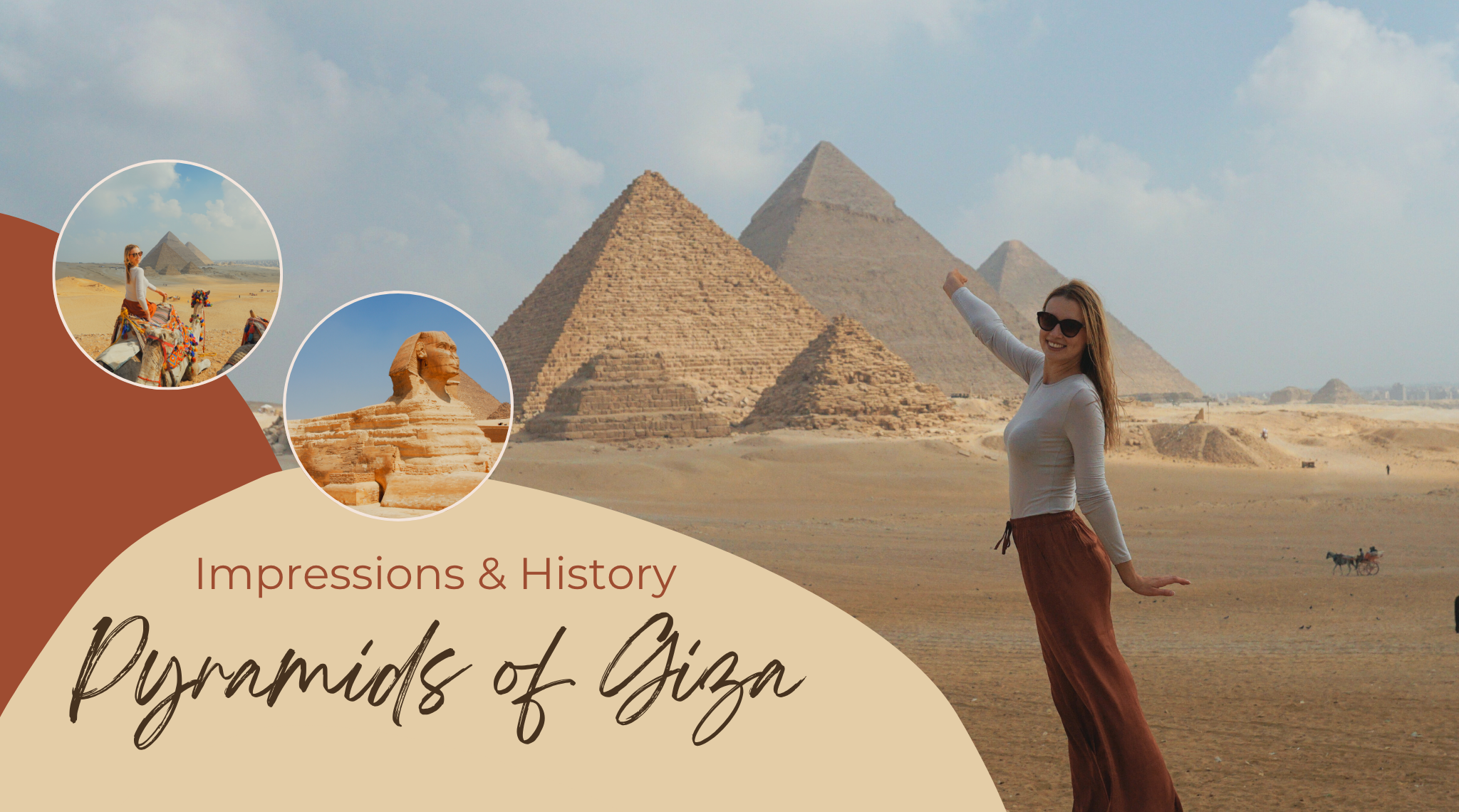
The moment you arrive at the Giza Plateau, one thing becomes clear – no photo can capture what it feels like to stand here in person. The scale is staggering: the Great Pyramid of Khufu rises nearly 140 meters into the sky, each stone block weighing several tons.
Travel Tip: Arrive as early as possible – ideally between 7 and 8 AM. The light is soft, the air crisp, and you’ll share the plateau with only a few other early risers (and a handful of curious camels).
2. A Glimpse into History
The Pyramids of Giza were built around 2500 BC during Egypt’s Old Kingdom as tombs for the pharaohs Khufu (Cheops), Khafre (Chephren), and Menkaure (Mykerinos). What makes them extraordinary is their preservation – despite thousands of years of sandstorms, earthquakes, and looting, they remain almost completely intact.
Historic Detail: The Great Pyramid of Khufu was once covered in smooth white limestone casing stones that made it gleam like gold in the sunlight. Today, only a few of these polished stones remain near the top.
More to Explore: To dive deeper into the history, visit the Grand Egyptian Museum (GEM) or the Egyptian Museum in Cairo, both home to countless artifacts excavated from Giza.
3. Exploring the Giza Plateau
The Giza Plateau is expansive yet easy to navigate – you can explore it on foot, or opt for a camel or horse ride for a more traditional experience.
Here are the main highlights:
Great Pyramid of Khufu: The largest and oldest of the three – you can also go inside with a separate ticket (around 1,500 EGP / $31 USD).
Pyramids of Khafre and Menkaure: Smaller but equally impressive – perfect for photos, as these areas are often less crowded.
Panoramic Point: The ultimate photo spot where you can see all seven pyramids aligned in one frame.
The Great Sphinx: Egypt’s most iconic monument, guarding the plateau from its lower edge.
A camel ride across the plateau is one of the most memorable ways to experience Giza. Prices vary depending on the route and your bargaining skills:
Approx. 200–400 EGP ($4–8 USD) for a 30–60-minute ride.
A short ride to the panoramic viewpoint is well worth it – from there, you’ll be rewarded with a breathtaking view of all seven pyramids. Riding through the desert with this view is a once-in-a-lifetime moment.
5. Practical Tips for Your Visit
Best Time to Visit: September – April offers pleasant temperatures and clear visibility.
Opening Hours: Daily from around 7:00 AM to 5:00 PM (extended in summer).
Tickets: Available online or at the entrance. The Giza Plateau ticket costs about 700 EGP ($13 USD), and access inside the Great Pyramid costs 1,500 EGP ($31 USD).
Getting There: The easiest option is Uber from Cairo (30–45 minutes) or from your accommodation in Giza.
Time Needed: Plan for 2–4 hours on the plateau. Midday heat can be intense – early mornings or late afternoons are ideal for exploration and photography.
Our conclusion: The Pyramids of Giza are far more than just a photo backdrop – they are a living link to ancient history. The morning light over the plateau is pure magic, and with a bit of planning, half a day is enough to experience one of the world’s greatest wonders up close.
Would you prefer to explore the pyramids relaxing with a guide or on your own across the plateau? Share this guide with your favorite road trip buddies and leave us a comment below!
Discover the perfect 2-week Thailand itinerary – stunning beaches, island hopping, insider tips, and a well-planned route through Phuket, Koh Yao, and Krabi.



Leave a Reply