
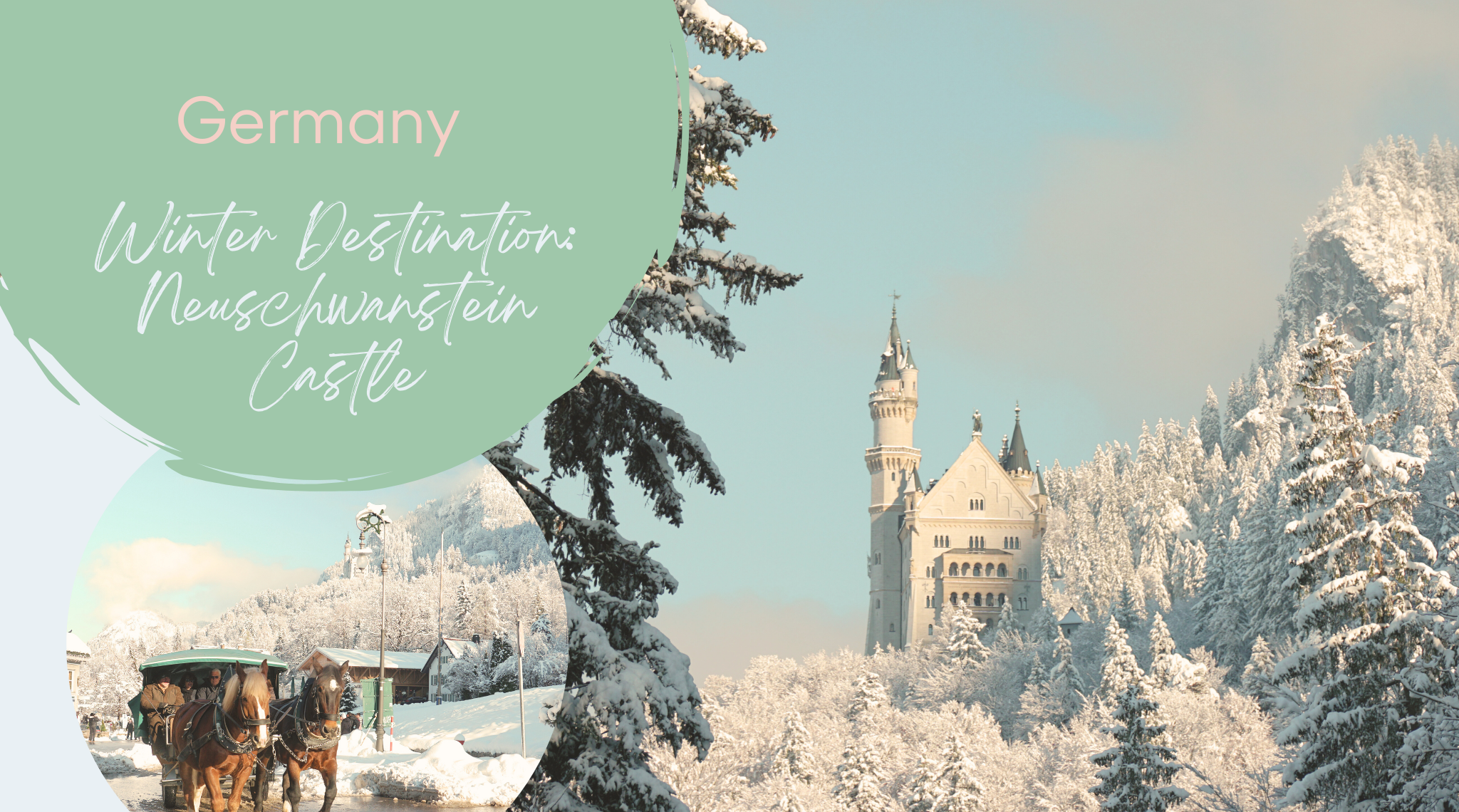
Some places truly reveal their magic in winter – and Neuschwanstein Castle is undoubtedly one of them. Once a gentle blanket of snow covers the forests and the castle itself, the entire scene feels like a fairytale. Experience your own winter wonderland around Germany’s most famous castle and discover why Neuschwanstein is one of Bavaria’s most enchanting winter destinations.
1. Getting to Neuschwanstein Castle in Winter – Location & Best Route

- Winter at Neuschwanstein Castle: While Neuschwanstein is often crowded in summer, the castle feels much more relaxed during the winter months. Temperatures are cooler and some paths may be snow-covered, but visitors are rewarded with a truly magical, mystical backdrop.
- Location: Neuschwanstein Castle is situated near Füssen in the southern Allgäu region and remains one of Bavaria’s most popular attractions—even in winter.
- Getting There by Car: Traveling by car is straightforward, though winter brings a few special considerations:
- Roads are generally well-cleared, but winter conditions may still occur depending on snowfall.
- Parking lots P1–P4 in Hohenschwangau remain open during winter.
- Parking fee per vehicle: €12 (as of late 2025).
2. Best Time to Visit – When Neuschwanstein Castle Is Most Magical in Winter

- First Snowfall in November/December: If you can plan your visit flexibly, aim for the period around the first snowfall. If temperatures have already dropped below freezing, a snow-covered landscape is very likely. You can easily check current snow conditions via the webcams in Schwangau.
- Advent Season: Visiting in December often combines the festive Christmas atmosphere with fresh snowfall. Füssen and Schwangau are beautifully decorated for the holidays, and their Christmas markets add a magical touch to your castle visit.
- January/February: These months are among the quietest times to visit. The castle is usually heavily snow-covered, and the surrounding landscape appears especially wintry and atmospheric.
3. Hiking to the Castle & Other Transport Options

- Hiking Up on Foot: It takes about 30–40 minutes to reach the castle via a wide, paved road. The path goes through a forest and is usually well cleared in winter. However, some sections can be slippery – sturdy, winter-appropriate footwear is highly recommended.
- Shuttle Buses: In snow- and ice-free conditions, shuttle buses run approximately every 20 minutes to the “Jugend” viewpoint / Marienbrücke. More information can be found here.
- Horse-Drawn Carriage: A romantic alternative is the horse-drawn carriages, which operate in winter as well. Especially in light snowfall, the ride is a beautiful experience – though there may be waiting times. Prices are €8 per person for the uphill trip and €4 for the downhill ride.
4. Winter Highlights Around Neuschwanstein Castle

- Enjoy the Viewpoint & Castle Panorama: Once you reach the top, you’ll find a small panoramic platform. From here, you can photograph Neuschwanstein up close and take in the sweeping views of the winter landscape and snow-covered mountains.
- Castle Visit: While snow falls outside, step inside to immerse yourself in King Ludwig’s world: lavish rooms, intricately detailed murals full of mysticism, and medieval symbolism. Visiting Neuschwanstein Castle is only possible via guided tours with limited capacity:
- In winter, the castle is open daily from 10:00 a.m. to 4:00 p.m.
- Tours last approximately 30 minutes.
- Tickets are available only for fixed time slots.
- While last-minute spots are often available in winter, it’s recommended to book early on snowy days or weekends.
- Visit the Official Ticket Shop
- Marienbrücke: This classic viewpoint is often closed during snowfall or icy conditions. If it’s open, it’s worth a short detour – the view of the castle is spectacular and one of the most photographed angles.
- Alternative Viewpoints: If Marienbrücke is closed, there are several less crowded spots that also offer impressive views of the castle:
- Tegelberg Panorama Trail
- Forest Path toward Jugend
- Viewpoint on the path toward Pöllat Gorge
5. Photographing Neuschwanstein Castle in Winter

Neuschwanstein is one of the most photographed castles in the world – and in winter, it looks even more spectacular. The snow-covered forests, soft light, and crisp winter air create perfect conditions for stunning photos.
- Best Times of Day in Winter:
- Morning: The light falls directly on the castle façade – ideal for sharp, high-contrast shots.
- Early Afternoon: The sun rises behind the mountains, bathing the castle in warm winter light. Especially beautiful photos can be taken from the west side, along the lower part of the hiking trail.
- Photography Tips:
- After fresh snowfall, the forests look especially magical.
- Morning mist creates a mystical atmosphere.
- Keep batteries close to your body, as they drain faster in cold weather.
- A tripod is recommended for twilight or snowy conditions.
6. Winter Excursions Around Neuschwanstein Castle – Nearby Highlights

If you’re already in the area, you should definitely explore the surroundings – in winter, they turn into a small, magical winter world.
- Hohenschwangau Castle: This yellow castle lies just below Neuschwanstein and offers stunning winter views of the surrounding mountains.
- Alpsee: The roughly 5 km circular trail is especially romantic in winter. The combination of the still lake surface and snow-covered trees creates a fairytale-like atmosphere.
- Museum of the Bavarian Kings: Perfect during snowfall or icy conditions – the museum provides fascinating insights into the history of King Ludwig II and the Wittelsbach dynasty.
- Tegelberg & Other Hiking Trails: Easy to moderate winter hikes with breathtaking views over the Ammergau Alps.
- Füssen – Old Town & Cafés: Only about 5 minutes by car. Ideal for a cozy end to your day in a warm café or a winter stroll through the historic old town – including the Christmas market in December.
- Eibsee & Zugspitze: Around an hour away and perfect for a 2-day trip. The Eibsee’s 7.5 km circular trail is just as fairytale-like as the Alpsee when covered in snow. The Zugspitze also offers Germany’s highest ski area.
- Wellness in Schwangau: Many hotels in Schwangau feature panoramic saunas and wellness areas with mountain views – especially atmospheric after a cold winter day.
7. Gear & Tips – How to Make the Most of Your Winter Visit to Neuschwanstein Castle

For a winter visit to Neuschwanstein Castle, it’s a good idea to make a small packing list. This way, you won’t forget anything and can fully enjoy your excursion with the right gear. Here’s what to bring:
- Sturdy, winter-ready shoes with good grip
- Gloves, hat, scarf
- Warm jacket or coat
- Optional: non-slip ice grips
- Thermos with hot tea or coffee, plus a few cookies for a cozy break in the snow or in the car
Our conclusion: Visiting Neuschwanstein Castle in winter is a truly magical experience. Snow-covered forests and the fairytale atmosphere make it one of southern Germany’s most beautiful winter wonderland excursions.
Have you ever visited Neuschwanstein Castle in winter?
Share this guide with your favorite road trip buddies and leave us a comment below!
Discover Your Next Travel Destination:

The 6 Most Beautiful Coffeehouses in Vienna: Melange, Viennese Pastries & Coffeehouse Culture
Explore Vienna’s 6 most beautiful coffeehouses, from Café Demel and Café Landtmann to Café Sperl, with local coffee tips, classic pastries and essential etiquette.
Weiterlesen
48 Hours in Vienna: From Kaiserschmarrn to Culture & Hundertwasser
Discover the best of Vienna in 48 hours – explore imperial palaces, historic coffeehouses, Hundertwasser House, Schönbrunn Palace, and unforgettable cultural experiences.
Weiterlesen
Vienna in December: Christmas Markets, New Year’s Eve Trail & All the Highlights
Discover Vienna in December 2026: Visit the best Christmas markets, find the Red Heart and Giant Red Bow, and plan your New Year’s Eve itinerary with all the important dates.
WeiterlesenSomething went wrong. Please refresh the page and/or try again.

Leave a Reply