
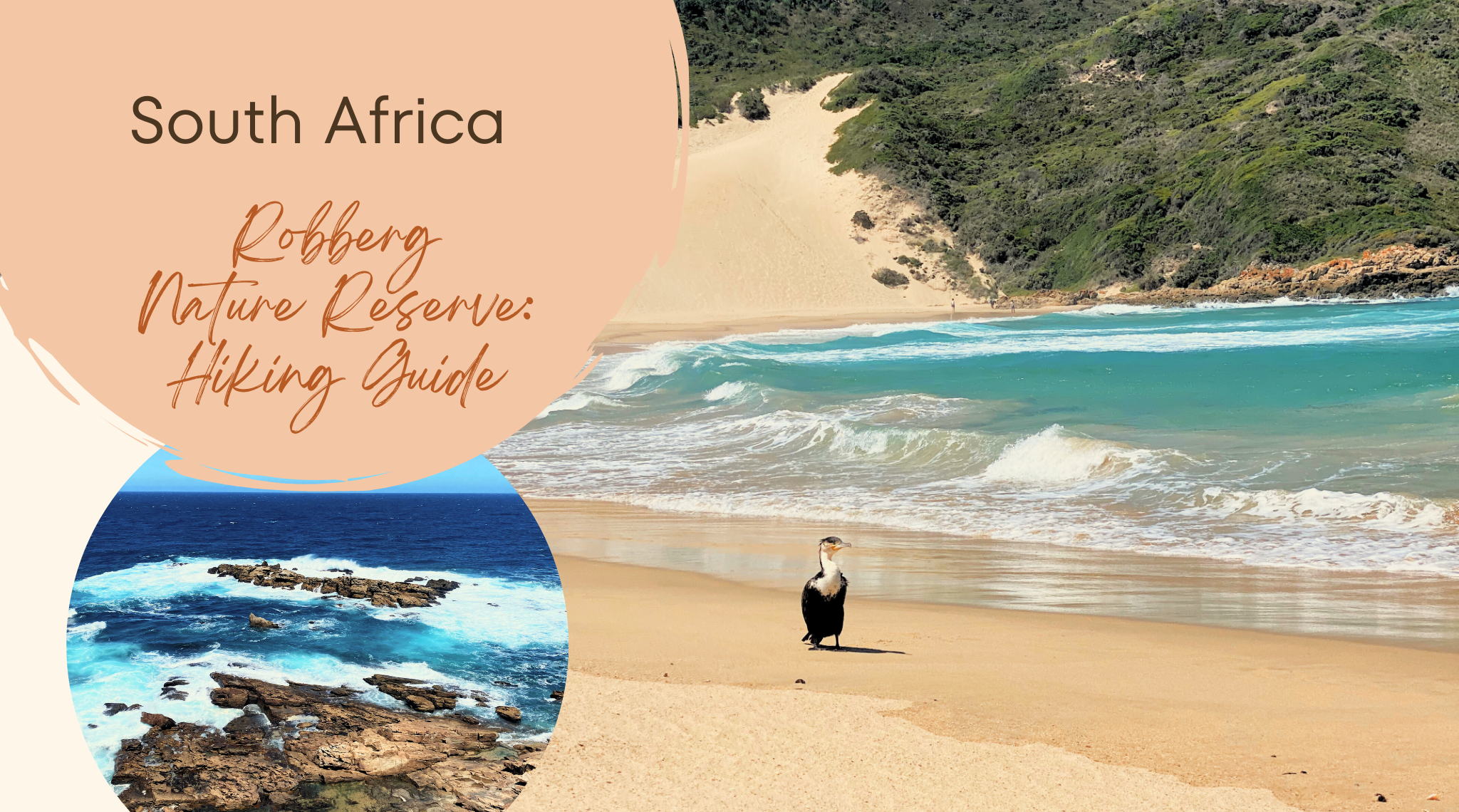
The Robberg Nature Reserve is one of the most spectacular natural areas along South Africa’s Garden Route. This narrow peninsula near Plettenberg Bay features dramatic cliffs, pristine white-sand beaches, and some of the most scenic coastal hikes in the country.
Unlike classic South African wildlife and nature parks, Robberg is not about driving – it’s about experiencing nature on foot. Well-maintained hiking trails lead through constantly changing landscapes, from fynbos and sand dunes to rugged coastline:
- 1. Location & Overview
- 2. Getting There, Entrance Fees & Opening Hours
- 3. Hiking Trails in the Robberg Nature Reserve
- 4. Sights & Natural Highlights
- 5. Facilities & Food
- 6. Best Time to Visit
- 7. Tips & Preparation for Your Visit
1. Location & Overview
The Robberg Nature Reserve is located along the Garden Route in South Africa’s Western Cape Province, just a few miles south of Plettenberg Bay. The peninsula stretches far into the ocean and is protected as both a terrestrial and marine reserve.
Robberg forms part of the Cape Floral Kingdom and protects diverse fynbos landscapes as well as important marine habitats. The reserve is especially known for:
- spectacular coastal hiking trails
- large Cape fur seal colonies
- dolphins and seasonal whale sightings
- breathtaking views along the entire peninsula
Despite its compact size, Robberg offers remarkable scenic variety, making it ideal for half-day or full-day trips.

2. Getting There, Entrance Fees & Opening Hours
Robberg is easy to reach and offers several access options:
- By car: From Plettenberg Bay, it’s about a 10–15-minute drive to the parking area at the end of Robberg Peninsula Road.
- By taxi or Uber: A convenient option if you’re staying in Plettenberg Bay and don’t want to drive after your hike.
- On foot or by bike: Possible for active travelers, but allow extra time and distance.
Entrance & opening hours:
- Entrance fee: small daily conservation fee per person (current info available here).
- Opening hours vary seasonally but are typically around 07:00 am – 06:00 pm.
- Important: Plan your hike so you return well before gate closing – especially if you’re doing the full loop trail.

3. Hiking Trails in the Robberg Nature Reserve
Robberg is famous for its loop trails. All routes are clearly marked, but depending on length, a basic level of fitness is required.
1. The Gap (short loop)
- Duration: approx. 30–45 minutes
- Difficulty: Easy
- Best for: Short visits, families, sunset walks
This short hike leads to the narrow land bridge known as The Gap and already offers impressive coastal and ocean views.
2. Witsand (medium loop)
- Duration: approx. 1.5–2 hours
- Difficulty: Moderate
- Highlights:
- White-sand beach
- Close-up views of the seal colony
- Coastal paths and fynbos
Ideal if you want a more immersive Robberg experience without completing the full loop.
3. Robberg Loop Trail (full circuit)
- Duration: approx. 3–4 hours (with stops)
- Difficulty: Moderate to challenging
- Distance: approx. 9 km
The full loop is the absolute highlight of the reserve and ranks among South Africa’s most beautiful coastal hikes.
What to expect:
- Constantly changing scenery: cliffs, dunes, beaches, and rocky plateaus
- Massive seal colonies with thousands of animals
- Excellent chances to spot dolphins and seasonal whales
- Historic caves and fascinating geological formations
The trail is varied and partly sandy, requiring sure-footedness – especially on windy days.

4. Sights & Natural Highlights
- Seal colony: One of the largest along the Garden Route – noisy, lively, and fascinating.
- Dunes & beaches: Particularly striking in the Witsand area.
- Marine life: Dolphins year-round, whales mainly from July to November.
- Fynbos vegetation: Especially colorful and diverse in spring.
5. Facilities & Food
Infrastructure within the Robberg Nature Reserve is intentionally minimal:
- Parking area at the entrance
- Toilets at the gate
- No restaurants or shops inside the reserve
- Self-catering is essential: Bring enough drinking water, snacks, and sun protection.
For cafés, restaurants, and supermarkets, Plettenberg Bay is the best option before or after your hike.

6. Best Time to Visit
Robberg can be visited year-round, depending on your focus:
- Best overall period: September–April
- Pleasant temperatures
- Good visibility
- Blooming fynbos in spring
- Winter (June–August):
- Cooler and often windy
- Excellent whale-watching opportunities
- Fewer visitors
7. Tips & Preparation for Your Hike
Before you go:
- Check weather and wind conditions – this is crucial
- Allow plenty of time
- Start early, especially in summer
Essentials:
- Pack at least 1.5–2 liters of water per person
- As well as sun protection and hat
- Sturdy hiking shoes
- Windbreaker
- Camera or binoculars
On the trail:
- Stay on marked paths
- Keep a safe distance from seals
- Turn back in strong wind or extreme heat
Our conclusion: The Robberg Nature Reserve is not a place to simply “tick off” – it’s a place to experience. The combination of dramatic coastal scenery, wildlife, and active exploration makes it one of the most impressive natural highlights along the Garden Route. If you love hiking and nature, Robberg is an absolute must.
When are you planning your loop hike on the Robberg Peninsula?
Share this guide with your favorite road trip buddies and leave us a comment below!
Discover Your Next Travel Destination:

The 6 Most Beautiful Coffeehouses in Vienna: Melange, Viennese Pastries & Coffeehouse Culture
Explore Vienna’s 6 most beautiful coffeehouses, from Café Demel and Café Landtmann to Café Sperl, with local coffee tips, classic pastries and essential etiquette.
Weiterlesen
48 Hours in Vienna: From Kaiserschmarrn to Culture & Hundertwasser
Discover the best of Vienna in 48 hours – explore imperial palaces, historic coffeehouses, Hundertwasser House, Schönbrunn Palace, and unforgettable cultural experiences.
Weiterlesen
Vienna in December: Christmas Markets, New Year’s Eve Trail & All the Highlights
Discover Vienna in December 2026: Visit the best Christmas markets, find the Red Heart and Giant Red Bow, and plan your New Year’s Eve itinerary with all the important dates.
WeiterlesenSomething went wrong. Please refresh the page and/or try again.

Leave a Reply