
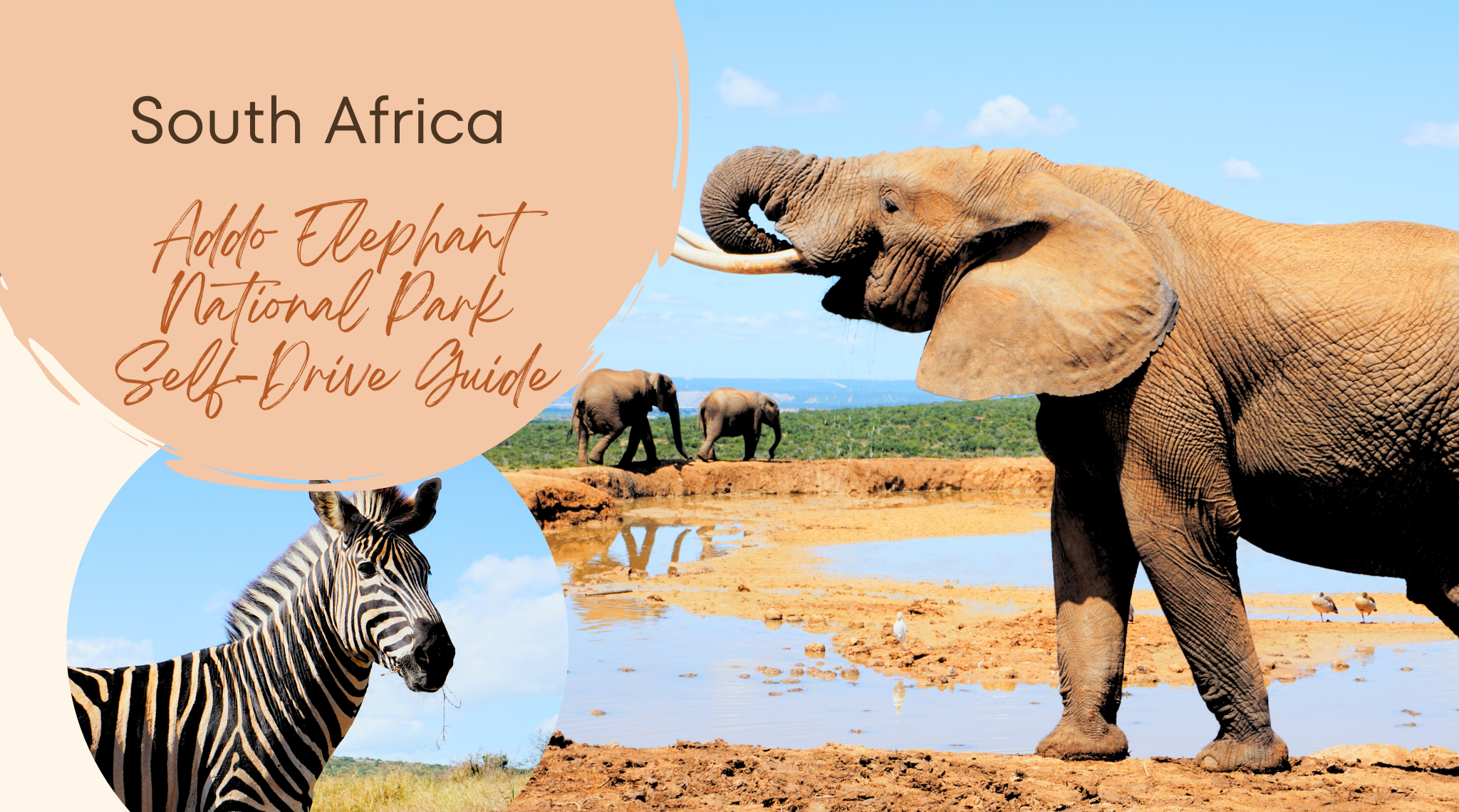
Addo Elephant National Park is one of South Africa’s most diverse national parks. Just a short drive from Port Elizabeth (Gqeberha), it’s famous for its large elephant population, but also offers classic bush landscapes, dense vegetation, and even coastal and marine areas. Perfect for self-drivers – here’s why:
- 1. Location & Overview
- 2. Getting There, Entry & Opening Hours for Self-Drivers
- 3. Best Routes & Highlights in Addo Elephant National Park
- 4. Accommodation In and Around Addo
- 5. Infrastructure & Facilities
- 6. Best Time to Visit
- 7. Preparation & Tips for Self-Drivers
1. Lage & Überblick
Addo Elephant National Park is located in the Eastern Cape Province. Its proximity to the Garden Route and the coast makes it easy to integrate into any South Africa road trip.
Covering roughly 3.95 million acres, including marine protected areas, Addo is one of South Africa’s largest national parks. For most visitors, the Main Game Area is the primary focus – well-maintained and perfect for self-drive safaris.
Addo is also one of the few parks in the world where you can experience the Big Seven: Elephant, Lion, Buffalo, Rhino, Leopard, as well as Whale and Great White Shark in the marine section.
2. Getting There, Entry & Opening Hours for Self-Drivers
Addo is very accessible by car, making it perfect for self-drivers. Popular routes:
- Port Elizabeth → Main Gate: ~44 mi, 1–1.25 hours
- Plettenberg Bay → Main Gate: ~186 mi, 4–5 hours
- The park has several entrances, with the Main Gate being the most important for first-time visitors.
- Roads are mostly paved or well-maintained gravel – no 4×4 required.

Entry fees (2026) & opening hours:
- Pay per person at the Main Gate (cash or card). International visitors: ~R492
- Fees may change – check the SANParks website before visiting.
- You’ll receive a detailed park map, current road & wildlife info, and park rules.
- Opening hours vary by season, typically 07:00–19:00 in summer.
3. Best Routes & Highlights in Addo Elephant National Park
Addo is one of South Africa’s top self-drive safari parks. High animal density means wildlife sightings are very likely even without a guide.
Popular Self-Drive Routes:
- Main Game Loop:
- Duration: 2–4 hours
- Highlights:
- Elephant herds at waterholes
- Buffalo, zebras, kudus
- and with luck, lions in denser areas
- Zuurkop Loop:
- Duration: 1.5–2 hours
- Highlights:
- Elevated terrain
- Wide views
- Good chance of antelopes, birds of prey, and warthogs

Not-to-Miss Waterholes & Viewpoints:
- Hapoor Dam & Gwarrie Pan Lookout: Best spots for elephant sightings
- Carol’s Rest: Historic viewpoint & picnic spot
- Domkrag Waterhole: Most active in the early morning
Wildlife You Can Expect:
- Elephants (very high chance!)
- African buffalo
- Zebras
- Kudus & elands
- Warthogs
- Hyenas
- Lions (with patience & luck)
- Numerous bird species
4. Accommodation In and Around Addo
The park offers both in-park accommodation and plenty of budget-friendly guesthouses & B&Bs nearby:
Inside the Park:
- Addo Accomodations: Ideal for maximizing time in the park
- Style: Functional, nature-focused
- Options: Chalets, camping
- Advantage: Start your safari directly from your doorstep
Outside the Park – Addo, Kirkwood & Surroundings:
- Addo Dung Beetle Guest Farm: Expansive farm setting, great for multiple safari days
- Style: Rustic, nature-focused, relaxed
- Location: Quiet, 10–15 minutes from Main Gate
- Extras: Garden, 2 outdoor pools, secure parking

5. Infrastructure & Facilities
Addo’s infrastructure is concentrated around Main Camp near the entrance. Here you’ll find:
- Reception & visitor info
- Fuel station (for overnight guests)
- Small shop for essentials
- Cattle Baron Restaurant
Pro tip: Stock up outside the park – supermarkets, petrol stations, pharmacies, cafés, and restaurants are available in Addo, Kirkwood, and Colchester.
6. Best Time to Visit
Addo is open year-round, but the best months depend on your goals:
- May–September:
- Mild temperatures
- Less vegetation for better visibility
- Excellent wildlife sightings
- Summer (October–March):
- Warm to hot temperatures
- Animals gather at waterholes
- Denser vegetation
Time of Day Tip: We spent a full day in Addo in January, and the highlight for us was seeing a huge herd of elephants at Hapoor Drinking Hole around 10:30 am – arguably one of the best spots to catch wildlife activity in the morning.

7. Preparation & Tips for Self-Drivers
Before Your Trip:
- Book park accommodation early; nearby guesthouses can be booked last-minute
- Stock up on water (2–3 liters per person) and snacks for a full day
- Check your vehicle & fill the tank
Essentials to Bring:
- Hat, sunscreen, sunglasses
- Camera with zoom lens + binoculars
- Offline maps (e.g., Google Maps)
In the Park:
- Respect speed limits (max 40 km/h / 25 mi / h)
- Keep a safe distance from elephants
- Turn off the engine when observing animals
- Only exit vehicles at designated points
Our conclusion: For us, Addo Elephant National Park was one of the absolute highlights of our South Africa road trip. The high density of elephants created unforgettable moments, while the well-maintained infrastructure and diverse landscapes made self-driving both exciting and safe. Combine Addo with the Garden Route for the ultimate South African safari-road trip experience.
When are you planning to visit Addo Elephant National Park – or have you already been?
Share this guide with your favorite road trip buddies and leave us a comment below!
Discover Your Next Travel Destination:

The 6 Most Beautiful Coffeehouses in Vienna: Melange, Viennese Pastries & Coffeehouse Culture
Explore Vienna’s 6 most beautiful coffeehouses, from Café Demel and Café Landtmann to Café Sperl, with local coffee tips, classic pastries and essential etiquette.
Weiterlesen
48 Hours in Vienna: From Kaiserschmarrn to Culture & Hundertwasser
Discover the best of Vienna in 48 hours – explore imperial palaces, historic coffeehouses, Hundertwasser House, Schönbrunn Palace, and unforgettable cultural experiences.
Weiterlesen
Vienna in December: Christmas Markets, New Year’s Eve Trail & All the Highlights
Discover Vienna in December 2026: Visit the best Christmas markets, find the Red Heart and Giant Red Bow, and plan your New Year’s Eve itinerary with all the important dates.
WeiterlesenSomething went wrong. Please refresh the page and/or try again.

Leave a Reply