
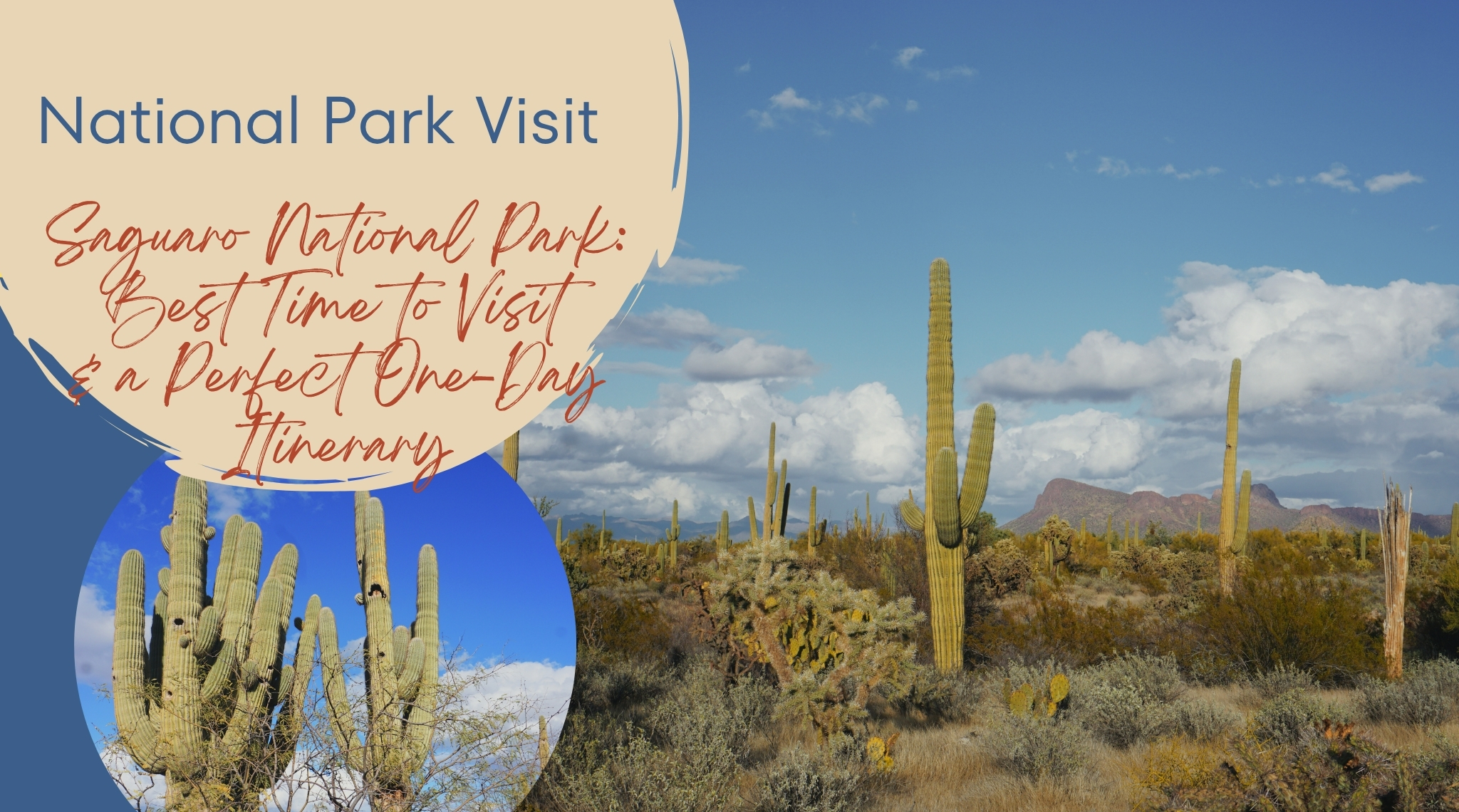
Towering cacti with arms reaching toward the sky, sunsets glowing in shades of orange and purple, and a landscape that looks like it was lifted straight from a classic Western – few national parks capture the spirit of the Wild West quite like Saguaro National Park near Tucson, Arizona. This is where the iconic saguaro cactus grows, and where the Sonoran Desert reveals some of its most spectacular scenery. In this guide, you’ll discover the best time to visit Saguaro National Park, whether to explore the East or West district, how much admission costs in 2026, and how to experience the highlights in just one day. It’s an especially appealing winter destination when much of Europe is gray and cold:
1. History and Background
The saguaro cactus (Carnegiea gigantea) grows exclusively in the Sonoran Desert, a region spanning the southwestern United States and northern Mexico. To protect this remarkable species, Saguaro National Monument was established in 1933 and became a national park in 1994. Today, the park covers approximately 370 square kilometers (143 square miles) and consists of two separate districts on either side of Tucson.
Saguaros grow incredibly slowly. They often don’t develop their first arms until they’re 50 to 75 years old, and some specimens live for more than 150 years. These iconic plants are protected by law, and damaging them is a criminal offense. The park also preserves traces of the region’s human history. At Signal Hill, you can see petroglyphs created by the Hohokam people, some of which date back as far as 1,500 years.
2. Best Time to Visit Saguaro National Park

The Sonoran Desert has distinct seasons, each offering a different experience:
- Winter (December to February): Pleasant daytime temperatures make this an ideal season for hiking. Nights can get cold, and temperatures may even drop below freezing in the early morning. Winter is peak season, especially on weekends.
- Spring (March to May): In good years, wildflowers such as lupines, poppies and ocotillo begin blooming from mid to late March. The saguaros themselves start flowering in late April, usually reaching their peak in May. However, temperatures often climb well above 30°C (86°F) by May.
- Summer (June to September): Temperatures are extremely high, often exceeding 40°C (104°F). Hiking is only advisable around sunrise. The monsoon season runs from mid-June through late September, bringing sudden thunderstorms, which typically become more common from early July onward.
- Fall (October to November): The intense summer heat begins to fade. November brings comfortable temperatures and fewer visitors than the winter months.
Our tip: For a winter visit in 2026/27, we recommend traveling between November and March. If seeing the saguaro flowers is your priority, plan your trip for late April or May – but be prepared for considerably higher temperatures.
Our experience in January: We visited Saguaro National Park in January and practically had it to ourselves. A soft, golden light stretched across the cactus forest throughout the day, creating beautiful conditions for photography and leisurely stops at the scenic overlooks. It was chilly during the day, but a lined softshell jacket was more than enough to keep us comfortable. For us, winter is a wonderful time to experience Saguaro National Park.
3. How to Get There and 2026 Entrance Fees
Saguaro National Park is located on the outskirts of Tucson, Arizona, and is easiest to explore by car:
Nearby airports:
- Tucson International Airport (TUS) – the closest airport
- Phoenix Sky Harbor International Airport (PHX) – approximately 1.5 to 2 hours away by car
Entrance fees (according to the National Park Service):
- Private vehicle: $25 (valid for 7 days and covers both districts)
- Motorcycle: $20
- On foot or by bicycle: $15 per person aged 16 and older
- America the Beautiful Pass: $80 for U.S. residents and $250 for non-U.S. residents (since January 1, 2026)
Good to know for 2026: Since January 2026, visitors who are not U.S. residents have been required to pay an additional $100 per person at 11 popular national parks, including Grand Canyon, Yosemite, Zion and Sequoia & Kings Canyon National Parks. Saguaro National Park is not among them, so you’ll only pay the regular entrance fee here. If you’re planning a longer road trip that includes several national parks, the $250 America the Beautiful Pass may be worth considering.
4. Saguaro East vs. West: Which District Is Better?

Saguaro West (Tucson Mountain District):
- A denser cactus forest and the best sunset viewpoints
- Highlights include Red Hills Visitor Center, Bajada Loop Drive (approximately 10 km / 6.2 miles, unpaved), Signal Hill with its petroglyphs, and Valley View Overlook
- Cell phone reception is often poor, according to travel guides
Saguaro East (Rincon Mountain District):
- Highlights include Cactus Forest Loop Drive (approximately 13 km / 8 miles, paved one-way road), Javelina Rocks Overlook, and Rincon Mountain Visitor Center
- Popular with cyclists and hikers, with much of the park’s wilderness extending into the Rincon Mountains
Our recommendation: If you only have time for one district, choose Saguaro West for its denser cactus forest and spectacular sunsets. With a full day available, you can visit both: explore East in the morning and head to West for sunset.
5. Top Attractions in Saguaro National Park
- Valley View Overlook (West): A short trail leads to a scenic platform overlooking Avra Valley. It’s particularly popular around sunset.
- Signal Hill (West): A short climb takes you to the Hohokam petroglyphs. There’s also a picnic area with views toward the west.
- Bajada Loop Drive (West): An approximately 10 km (6.2-mile) unpaved road winding through the cactus forest.
- Cactus Forest Loop Drive (East): An approximately 13 km (8-mile) paved one-way road with several scenic viewpoints along the way.
- Javelina Rocks Overlook (East): A rocky viewpoint overlooking the park and Tucson, and a popular spot to watch the sunset in the eastern district.
- Gates Pass: Located outside the national park in Tucson Mountain Park, this is nevertheless one of the area’s best-known sunset viewpoints.
6. Best Hiking Trails in Saguaro National Park

Valley View Overlook Trail (West)
Distance: Approximately 1.3 km (0.8 miles) round trip | Difficulty: Easy | A short trail lined with cacti leads to sweeping desert views. It’s an excellent choice for a quick walk, especially around sunset.
Signal Hill Trail (West)
Distance: Less than 1 km (0.6 miles) round trip | Difficulty: Easy, with a short scramble | This trail takes you up to the Hohokam petroglyphs. Stay on the designated path and avoid climbing on the rocks.
Desert Discovery Nature Trail (West)
A short loop with informative signs explaining the desert ecosystem. It’s a good option for beginners and families.
Desert Ecology Trail (East)
A short, paved trail that’s also wheelchair accessible.
Freeman Homestead Trail (East)
Distance: Approximately 1.6 km (1 mile) | Difficulty: Easy | A short loop with interpretive signs explaining the history of early settlers in the area.
7. The Perfect One-Day Itinerary for Saguaro National Park

- 8:00 AM: Start at Red Hills Visitor Center in Saguaro West, pick up a map and walk the short Desert Discovery Nature Trail.
- 9:30 AM: Explore Valley View Overlook Trail and Signal Hill.
- 11:30 AM: Drive along Bajada Loop Drive through the impressive cactus forest.
- Around noon: Stop for lunch in Tucson.
- 2:00 PM: Head to Saguaro East, drive the Cactus Forest Loop Drive and take a short walk along Desert Ecology Trail.
- Late afternoon: Return to Saguaro West for sunset at Valley View Overlook or Gates Pass.
Alternative: If you’re only visiting one district, spend the day in Saguaro West and stay until after sunset. Once darkness falls, the towering cacti take on an entirely different atmosphere.
8. Facilities, Opening Hours and Accommodation
- Opening hours: According to the National Park Service, the park is open year-round, 24 hours a day. Visitor centers are generally open from 9 AM to 5 PM, with shorter hours from June through September. According to travel reports, Bajada Loop Drive is only open to vehicles until dusk. Check current opening hours and road closures before your visit.
- Food and gas: There are no restaurants or gas stations inside the park. You’ll find both in Tucson.
- Camping: There are no traditional drive-in campgrounds within the park. Saguaro East has six backcountry campsites in the Rincon Mountains, accessible only on foot. A permit costs $8 per night per site and must be booked through recreation.gov. Overnight stays inside Saguaro West are not permitted.
- Hotels and camping nearby: Tucson offers hotels in every price range as well as several campgrounds in the surrounding area.
9. Final Tips Before Your Visit

- Water: Bring at least 2 liters per person in summer – even for short hikes.
- Sun protection: Pack a hat, sunscreen and sunglasses – even in winter.
- Dress in layers in winter: Early mornings and nights can be cold, while daytime temperatures may be sunny and warm.
- Wildlife: The desert is home to rattlesnakes, scorpions and javelinas (wild pig-like animals). Keep your distance and watch your step.
- Cacti: Don’t touch them.
- Phone reception: Use offline maps, especially if you’re exploring the western district.
Frequently Asked Questions About Saguaro National Park
November through March offers the most comfortable temperatures. If you want to see the cacti in bloom, visit in late April or May. Summer temperatures often exceed 40°C (104°F).
The entrance fee is $25 per vehicle, valid for seven days and covering both districts. Saguaro National Park is not among the 11 parks that charge non-U.S. residents the additional $100 fee.
Saguaro West has the denser cactus forest and better sunset viewpoints. Saguaro East is generally quieter and features the paved Cactus Forest Loop Drive.
Allow 3 to 6 hours to explore one district. If you want to see both East and West, plan on spending a full day.
The saguaros usually bloom from late April through June, with peak flowering in May.
Our conclusion: With the right timing, a sunset among towering cacti and a stop along your Interstate 10 road trip, Saguaro National Park can easily become one of the highlights of the American Southwest.
Which season would you choose for a visit to Saguaro National Park – the peaceful golden light of winter or the spectacular cactus blooms in May?
Share this guide with your favorite travel buddies and leave us a comment below!
Discover Your Next Travel Destination:

Tombstone, Arizona: Experience the Wild West – Top Attractions, Admission & Travel Tips
Explore Tombstone, Arizona – historic sites, saloons and museums set against an authentic Wild West backdrop. Get tips, prices and opening hours for the perfect half-day visit.
Weiterlesen
Mission San Xavier del Bac: A Guide to Arizona’s White Dove of the Desert
Visit Mission San Xavier del Bac near Tucson and learn more about its history, free admission, opening hours, traditional fry bread and tips for a scenic stop along I-10.
Weiterlesen
Christmas Photo Spots in Munich: 10 Magical Places in the Old Town
Discover 10 photo spots – from the Hogwarts-like Rathaus courtyard and panoramic tower views to Krampus parades and horse-drawn carriages. 2026 dates and prices included.
WeiterlesenSomething went wrong. Please refresh the page and/or try again.

Leave a Reply