
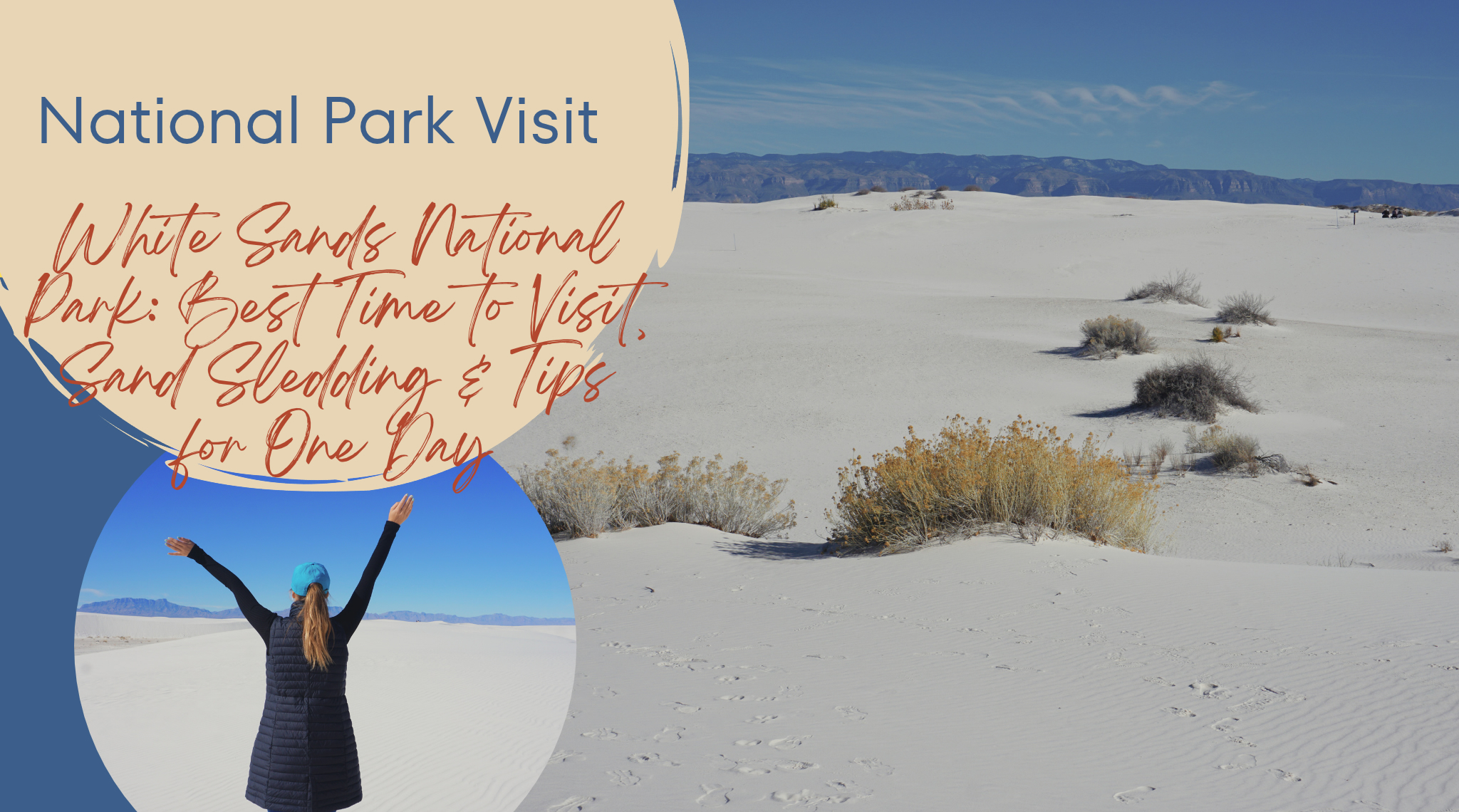
Endless white dunes stretching as far as the eye can see, sunsets painted in shades of pink and purple, and the feeling of walking across snow – except without the freezing cold under your feet. White Sands National Park in New Mexico is one of the most extraordinary national parks in the United States. In this guide, you’ll find out when to visit, how to combine sand sledding, hiking and sunset views, what admission costs in 2026, and how to make the most of a day in the park. Winter is especially magical, when the air is crisp and the dunes can feel almost deserted:
1. History and Background
The dune field in the Tularosa Basin is made of gypsum, not quartz sand. Gypsum is usually water-soluble and gets washed away by rain. Here, however, it collects in a closed basin with no outlet, where the wind gradually shapes it into vast dunes. According to the National Park Service (NPS), this is the largest gypsum dune field in the world, although only part of it lies within the park. The area was designated a national monument in 1933 and became a national park in 2019.
What makes it special: Gypsum sand doesn’t get hot. Even on sunny days, you can walk barefoot across the dunes. The region is also closely connected to the history of space exploration and missile testing, as the park is located in the middle of White Sands Missile Range.
2. Best Time to Visit White Sands National Park

- Winter (December to February): Crisp, clear air, daytime temperatures usually around 50 to 59°F (10 to 15°C), and freezing temperatures at night. There are fewer visitors, the light is softer, and the sunsets can be spectacular. Dress warmly, and you may have much of the dunes to yourself.
- Spring (March to May): Pleasant temperatures, but often windy, with sand blowing across the dunes. This is a popular time to visit.
- Summer (June to September): Hot temperatures and frequent thunderstorms. Sand sledding and walking are still possible because the gypsum sand stays relatively cool, but the air itself can get very hot.
- Fall (October to November): Pleasantly mild and relatively quiet, making this another excellent time to visit.
Our tip: From March through December, the park hosts Full Moon Nights. On these evenings, the park stays open two hours later. Check the NPS website for dates and details.
3. How to Get There and Entrance Fees in 2026
White Sands National Park is located in southern New Mexico, about 20 minutes from Alamogordo and approximately one hour from Las Cruces. From El Paso, Texas, the drive takes around 1.5 hours. Its location makes it an ideal stop on an Interstate 10 road trip between Arizona and Texas.
Entrance fees:
- Private vehicle: Approximately $25, valid for 7 days
- America the Beautiful Pass accepted: $80 for U.S. residents and $250 for non-U.S. residents (since January 1, 2026)
Good to know: White Sands National Park is not among the 11 national parks where non-U.S. residents have to pay an additional $100 per person starting in January 2026. The regular entrance fee applies here. However, the pass does not cover the program fee for Moonlight Hikes. Visit the NPS website for more information.
4. Sand Sledding, Hiking or Sunset: What Should You Do?

Sand sledding:
- The visitor center has sleds and wax for rubbing on the sleds
- The best slopes are on the steeper dunes farther along Dunes Drive.
Hiking:
- Short trails such as the Interdune Boardwalk and Playa Trail are great for beginners.
- The Alkali Flat Trail takes you deep into the vast dune field. Be sure to bring plenty of water.
Sunset:
- The golden hour before sunset is the most popular time to visit.
- Join one of the ranger-led Sunset Strolls for a guided experience. Check the NPS website for details.
Our recommendation: If you only have half a day, combine Dunes Drive, sand sledding and sunset. If you have more time, add the Alkali Flat Trail in the morning.
5. Top Things to See in White Sands National Park
- Visitor Center: A historic 1930s building in Pueblo Revival style, with exhibits, a gift shop and the latest information on park closures.
- Dunes Drive: An approximately 8-mile (13 km) road leading into the heart of the dunes. Toward the end, the paved road transitions into compacted gypsum sand.
- Interdune Boardwalk: A short boardwalk with interpretive signs explaining the landscape. It is also wheelchair accessible.
- Dune Life Nature Trail: An approximately 1-mile (1.6 km) loop where you can learn about the local plants and wildlife.
- Playa Trail: A short trail of about 0.5 miles (0.8 km) leading to a dry playa.
- Alkali Flat Trail: An approximately 5-mile (8 km) round-trip hike through the open dune field.
- Lake Lucero: During the cooler months, rangers lead guided visits to the source of the gypsum by reservation.
6. Hiking Trails in White Sands National Park

- Interdune Boardwalk | Distance: Under 0.6 miles (1 km) | Difficulty: Easy
A short, accessible walk and a great introduction to the park. - Playa Trail | Distance: About 0.5 miles (0.8 km) round trip | Difficulty: Easy
A short walk that takes around 30 minutes to complete. - Dune Life Nature Trail | Distance: About 1 mile (1.6 km) | Difficulty: Easy to moderate
A small loop with plenty of sand beneath your feet. - Alkali Flat Trail | Distance: About 5 miles (8 km) round trip | Difficulty: Moderate to challenging
This exposed trail offers no shade, so follow the trail markers carefully. It’s best to start in the morning and bring plenty of water.
Our Tip: The dunes can quickly start to look alike. Pay attention to the trail markers and download an offline map before your visit, as footprints and tracks can disappear in the wind.
7. The Perfect One-Day Itinerary for White Sands National Park
- 8:00 AM: Visit the visitor center, rent a sled and fill up your water bottles.
- 9:00 AM: Explore the Interdune Boardwalk and Playa Trail.
- 10:30 AM: Follow Dunes Drive to the end and go sand sledding on the taller dunes.
- 12:30 PM: Enjoy a picnic among the dunes.
- 2:00 PM: Hike the Alkali Flat Trail during the cooler months, or simply relax in the sand.
- Late afternoon: Find a spot on the dunes to watch the sunset and capture photos in the beautiful low-angle light.
- Evening: Spend the night in Alamogordo or Las Cruces.
Alternative: If you only have half a day, arrive in the afternoon, enjoy some sand sledding and stay for sunset.
8. Facilities, Opening Hours and Where to Stay
- Opening hours: During winter, Dunes Drive is open from 7:00 AM until sunset. The visitor center is open from 8:00 AM to 5:00 PM.
- Missile testing: The park and U.S. Highway 70 may be closed for up to three hours due to missile tests at the neighboring range. Check the park’s status page on the morning of your visit.
- Food and gas: There are no restaurants or gas stations inside the park. You’ll find both in Alamogordo or Las Cruces.
- Camping: There is no conventional campground or RV parking area. The park gates close every evening. According to available sources, backcountry camping is possible at a limited number of sites with a permit.
- Accommodation: Alamogordo is the closest town, about 20 minutes away. Las Cruces approximately one hour away, offers a wider range of accommodation.
9. Final Tips Before Your Visit
- Sunglasses and sunscreen: The white gypsum sand reflects a lot of sunlight, even in winter.
- Water: Bring at least 2 to 4 liters per person, even for shorter walks.
- Layered clothing: Temperatures can drop quickly in the evening during winter.
- Navigation: Follow the trail markers and download offline maps before entering the park.
- Sand sledding: Apply wax to your sled beforehand to help it glide more smoothly.
- Drones: Drones are generally prohibited in national parks.
- Sandstorms: If it’s windy, bring a scarf and protective eyewear to shield your eyes and camera from blowing sand.
Our conclusion: White Sands National Park is a place you can explore in just a few hours, yet the experience will stay with you long after you leave. Visit at the right time of year, watch the sun set over the dunes and make it a stop on your Interstate 10 road trip – it’s an unforgettable highlight of the American Southwest.
Which time of year would you choose for a visit to White Sands National Park – the peaceful winter light or a summer evening under the full moon?
Share this guide with your favorite travel buddies and leave us a comment below!
Discover Your Next Travel Destination:

Arizona in Winter 7 Places to Visit for Sunshine, Desert Landscapes & Wild West Charm
Explore Arizona in winter: Saguaro National Park, Tombstone, the Grand Canyon and Monument Valley. Get weather tips, entrance fees and a 7- to 10-day itinerary.
Weiterlesen
Tombstone, Arizona: Experience the Wild West – Top Attractions, Admission & Travel Tips
Explore Tombstone, Arizona – historic sites, saloons and museums set against an authentic Wild West backdrop. Get tips, prices and opening hours for the perfect half-day visit.
Weiterlesen
Mission San Xavier del Bac: A Guide to Arizona’s White Dove of the Desert
Visit Mission San Xavier del Bac near Tucson and learn more about its history, free admission, opening hours, traditional fry bread and tips for a scenic stop along I-10.
WeiterlesenSomething went wrong. Please refresh the page and/or try again.

Leave a Reply