
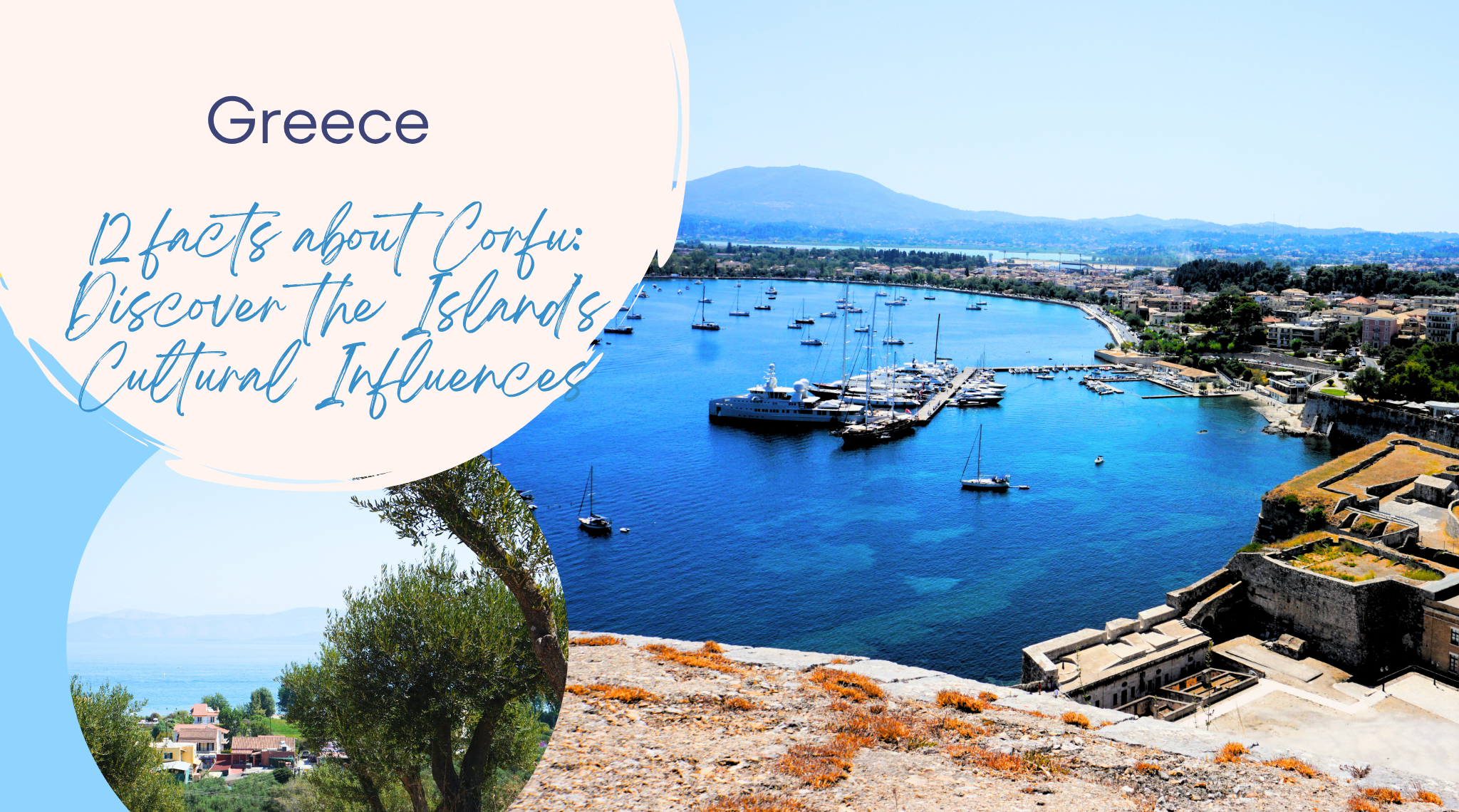
The Ionian island of Corfu attracts many visitors each year with its expansive beaches and charming resorts. Beyond its beauty, this Greek island is rich in history, culture, and myth. From ancient legends and majestic palaces to unique traditions and breathtaking nature, here are some fascinating facts about Corfu that you probably didn’t know.
1. UNESCO World Heritage Site
The old town of Corfu (Kerkyra) has been a UNESCO World Heritage Site since 2007. Its narrow streets, Venetian buildings and impressive fortresses make it an architectural gem.
2. Olive Groves
Corfu is famous for its olive trees, of which there are about 4 million on the island. Some of these trees are over 400 years old and one is over 1,000 years old! Corfu’s olive oil is known for its exceptional quality.
3. British and French influences
Due to its history under British and French rule, Corfu has a unique cultural mix. This is evident in the architecture, festivals and even the local cuisine.
4. Battles for Corfu
Corfu’s strategic location has made it a battleground throughout history, with fierce conflicts between the Venetians and the Ottomans in particular during the Middle Ages.
5. Myth of Ulysses
The bay of Paleokastritsa on Corfu is often said to be the place where Ulysses was rescued by Nausica. This beautiful bay is now a popular tourist destination in the northwest of the island.
6. Corfiot Wine
Wine making has a long tradition in Corfu. The most famous local wines are “Kakotrygis” and “Petrokoritho”, both of which benefit from the fertile soil and mild climate.
7. Local Cuisine
Corfiot cuisine is strongly influenced by Venetian traditions. Typical dishes include “pastitsada” (a kind of beef stew) and “sofrito” (veal in white wine sauce).
8. Double defense walls
The old Venetian fortress in Corfu Town (Palaio Frourio) is surrounded by double walls built during the Venetian rule. These walls provided strong protection against the Ottomans and helped to secure the island for centuries.
9. Originally Byzantine
The current structure of the fortress was greatly expanded by the Venetians, but its origins date back to Byzantine times.
10. English Cricket Ground
Corfu is the only Greek island where cricket is popular, a legacy of Brit
11. Sisi’s retreat
Empress Sisi loved Corfu so much that she regularly retreated there to escape the pressures of court life. She had the Achilleion Palace built as her personal retreat.
12. Emperor William II
After Sisi’s death, Emperor Wilhelm II acquired the Achilleion and used it as a summer residence, elaborately redesigning the gardens and statues to reflect his military interests.
Conclusion: These facts show the rich history and culture of this enchanting island, shaped by different civilizations over the millennia. Have you already booked your trip to Corfu?

Leave a Reply