
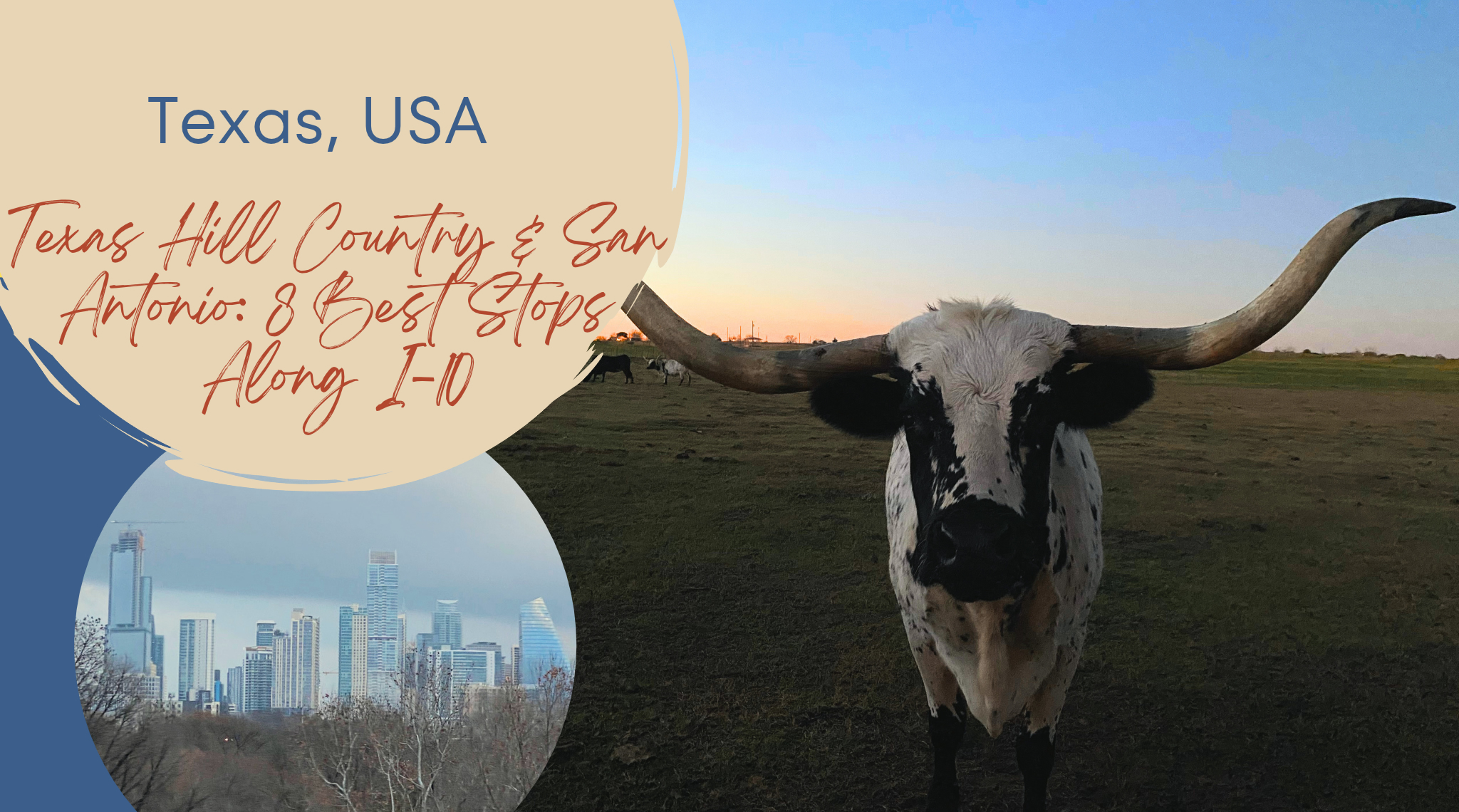
Based on our experience, the stretch of I-10 between El Paso and Houston can feel more like a long drive than a scenic adventure in winter. That’s exactly why San Antonio makes such a worthwhile stop along the way. The city combines fascinating history, the famous River Walk and plenty of festive lights in the weeks leading up to Christmas. In this guide, you’ll find 8 stops around San Antonio, with a focus on places that are easy to reach from Interstate 10:
1. Best Time to Visit San Antonio and the Hill Country
Texas winters are mild, but don’t expect tropical temperatures. You can generally look forward to sunny days, cool evenings and occasional frost in the Hill Country. November and December are particularly lovely, as the city is decked out in holiday decorations and visitor numbers are lower than during the summer months.
Our tip: Plan your trip between late November and December if you want to enjoy the holiday lights and festive atmosphere. For wildflowers such as bluebonnets, March and April are the best months.
2. Getting There and Getting Around
San Antonio is located in southern Texas and is easy to reach from I-10. San Antonio International Airport (SAT) is right in the city. Here are some approximate distances from San Antonio to the surrounding destinations:
- Boerne: About 31 miles (50 km) northwest, directly off I-10
- Kerrville: About 62 miles (100 km) northwest, also along I-10
- Fredericksburg: About 68 miles (110 km), accessible via Kerrville or Comfort
- Lyndon B. Johnson State Park (Stonewall): About 75 to 81 miles (120 to 130 km)
- Austin: About 81 miles (130 km), via I-35 (not part of I-10)
3. San Antonio: Where to Start Your Trip
Stop 1: Alamo

One of Texas’s most famous landmarks, the Alamo is a former Spanish mission that became the site of a pivotal battle in the fight for Texas independence in 1836. Following ongoing renovations, the Paseo del Alamo, which connects the historic complex with the River Walk, recently reopened. A new Alamo Museum and visitor center are scheduled to open in 2028. According to the site operators, admission to the Alamo grounds is generally free, although some programs require a ticket.
Our tip: Arrive in the morning, when it’s quieter, and combine your visit with a walk to the River Walk.
Stop 2: San Antonio River Walk

The River Walk is a pedestrian promenade following the San Antonio River, one level below street level. Lined with cafés, restaurants and charming bridges, it’s one of the city’s most popular attractions. In winter, the River Walk transforms into a festive wonderland. The Holiday Lights, a tradition dating back to 1975, illuminate the riverfront from late November through early January and are free to enjoy.
The season kicks off with the Ford Holiday River Parade, featuring beautifully illuminated boats. In 2026, the parade takes place on November 27. According to the ticket provider, reserved seating costs approximately $20 to $32. You can enjoy the holiday lights themselves without a ticket.
Our tip: Head out after dark and make sure to cross some of the bridges – they offer some of the best views of the lights.
Stop 3: The Four UNESCO Missions
South of downtown, four more historic missions line the river: Concepción, San José, San Juan and Espada. Together with the Alamo, they form a UNESCO World Heritage Site. These missions offer a peaceful alternative to the busy River Walk and can be explored by car or bike along the Mission Reach trail. If you’ve visited Mission San Xavier del Bac in Arizona, you’ll recognize the connection to the region’s Spanish colonial mission history.
4. Along I-10: Boerne and Kerrville
Stop 4: Boerne and Kerrville
If you’re driving from White Sands National Park toward San Antonio, you’ll pass Boerne, about 31 miles (50 km) before reaching the city, and Kerrville, approximately 62 miles (100 km) away. Both towns are located in the Texas Hill Country and make pleasant stops for a coffee break, a stroll through downtown or a wine tasting. They may not be major highlights in their own right, but they’re enjoyable places to stretch your legs if you’re traveling west or heading toward Fredericksburg.
5. Exploring the Texas Hill Country
Stop 5: Fredericksburg
Fredericksburg was founded by German settlers in the 19th century. The surrounding area still reflects its German heritage, with traditional half-timbered buildings, beer garden culture and local wineries. Downtown, Main Street is perfect for a leisurely stroll past boutiques and cafés.
Our tip: Fredericksburg is about 15 miles (25 km) west of LBJ State Park, making it easy to combine both destinations in one day.
Stop 6: Lyndon B. Johnson State Park & Historic Site

Located near Stonewall in the heart of the Hill Country, Lyndon B. Johnson State Park offers free admission. One of its highlights is the Sauer-Beckmann Living History Farm, where costumed rangers demonstrate what life was like for German immigrant families in Texas around 1918. You can explore the farmhouse, kitchen, workshop and farm animals while getting a glimpse into everyday life more than a century ago. The farm is open daily from 8:30 AM to 4:00 PM. There’s also a short nature trail of approximately 1.2 miles (1.9 km), which passes by bison and Texas Longhorn cattle.
Across the Pedernales River lies the LBJ Ranch, also known as the “Texas White House,” where former President Lyndon B. Johnson lived and worked. It is part of Lyndon B. Johnson National Historical Park. The best way to obtain a free driving permit for the ranch is to pick one up at the state park visitor center.
Our tip: Plan to spend one to two hours at the farm and arrive in the morning to see the rangers demonstrate traditional farm activities.
6. A Side Trip to Austin
Stop 7: Zilker Metropolitan Park

Zilker Park is Austin’s largest and most popular urban park. It includes Barton Springs Pool, a spring-fed swimming pool that stays around 68°F (20°C) year-round, the botanical garden and spacious lawns with stunning views of the Austin skyline. In winter, two seasonal highlights make the park especially worth visiting:
- Zilker Holiday Tree: A 155-foot (47-meter) illuminated tree made from strands of lights and 3,309 LEDs. It is on display from November 29 through January 1.
- Austin Trail of Lights: Running from December 10 to 23, 2026, this festive event features more than 2 million lights, over 90 illuminated trees and around 70 additional light installations. According to the organizers, admission is free on December 10, 11 and 13–17. On the other dates, tickets cost $8 for visitors aged 12 and older. Parking passes must be purchased online in advance, while shuttle tickets include admission.
Our tip: Plan your visit for a weekday with free admission, and book your parking or shuttle tickets online ahead of time.
7. Another Idea: New Braunfels and Gruene
Stop 8: New Braunfels and Gruene
Between San Antonio and Austin lies New Braunfels, another town founded by German settlers along I-35. Its historic district of Gruene is famous for its old dance hall, where you can still experience the local country music scene. On your way through the area, you’ll also pass the San Marcos Premium Outlets, making it a convenient place to add a shopping stop to your itinerary.
8. Suggested Itinerary: 3 Days Around San Antonio
- Day 1 – Texas Hill Country: Drive to Fredericksburg, then visit LBJ State Park and the Sauer-Beckmann Living History Farm in the afternoon. Continue via I-10 toward Boerne and San Antonio.
- Day 2 – San Antonio: Visit the Alamo in the morning, explore the River Walk around lunchtime and enjoy the Holiday Lights after dark.
- Day 3 – Austin: Drive approximately 62 miles (100 km) to Austin. Explore Zilker Park and Barton Springs, then visit the Trail of Lights in the evening if your dates line up.
Alternative: If you only have one day, stay in San Antonio and head to the River Walk in the evening. If you’re continuing toward Houston, allow approximately three hours for the drive from Austin.
9. Travel Tips for San Antonio and the Hill Country
- Rental car: You’ll need a car to explore the Hill Country, as public transportation options are very limited.
- Dress in layers: The days are often mild, but the mornings and evenings are usually chilly.
- Holiday season: San Antonio gets busy from late November through December, so book your accommodation well in advance.
- Holiday closures: Many attractions and businesses close on Thanksgiving, Christmas Day and New Year’s Day.
Our conclusion: San Antonio is an excellent stop along I-10, bringing together history, festive lights and a welcoming atmosphere. Add a drive through the Texas Hill Country and a side trip to Austin, and what could have been a simple overnight stop turns into a varied three-day road trip.
Which stops around San Antonio would you be most excited to explore first?
Share this guide with your favorite travel buddies and leave us a comment below!
Discover Your Next Travel Destination:

White Sands National Park: Best Time to Visit, Sand Sledding & Tips for One Day
Visit White Sands National Park in New Mexico. Discover the best time to visit, sand sledding, top sights, sunset spots and tips for a perfect day.
Weiterlesen
Arizona in Winter 7 Places to Visit for Sunshine, Desert Landscapes & Wild West Charm
Explore Arizona in winter: Saguaro National Park, Tombstone, the Grand Canyon and Monument Valley. Get weather tips, entrance fees and a 7- to 10-day itinerary.
Weiterlesen
Tombstone, Arizona: Experience the Wild West – Top Attractions, Admission & Travel Tips
Explore Tombstone, Arizona – historic sites, saloons and museums set against an authentic Wild West backdrop. Get tips, prices and opening hours for the perfect half-day visit.
WeiterlesenSomething went wrong. Please refresh the page and/or try again.

Leave a Reply